
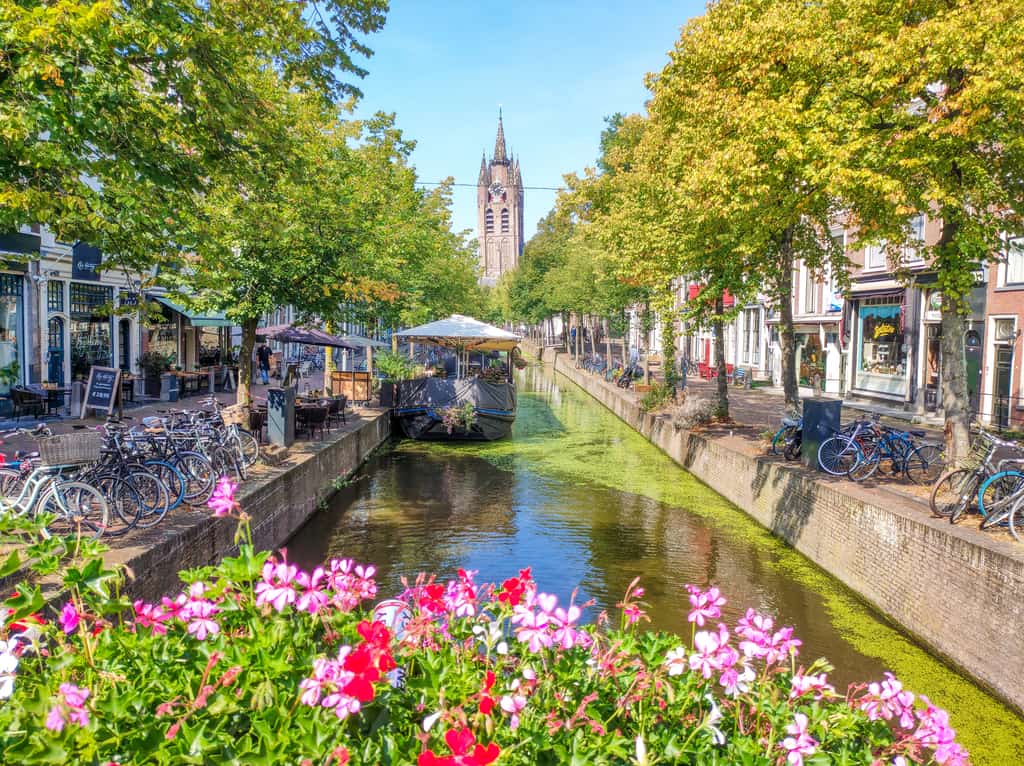
Delft, a charming city in the Netherlands, offers a rich blend of history, culture, and picturesque canal views. One of the best things to do in Delft is to explore Market Square, where you can admire landmarks like the City Hall and the Nieuwe Kerk, also known as the New Church. This historic square serves as the vibrant heart of the city, offering an excellent starting point for any visit.
A visit to the Museum Prinsenhof Delft is another top activity, providing a deeper look into the history of the Netherlands and the famous Delftware pottery. Housed in a building of great historical significance, this museum invites you to explore Dutch heritage and art.

Don’t miss the opportunity to stroll along Delft’s historic canals, lined with quaint houses and scenic bridges. These waterways offer a peaceful environment and reflect the city’s storied past. Exploring the canals on a cultural tour or a day trip allows you to truly appreciate the unique charm and beauty of Delft.
DISCLOSURE: This post contains affiliate links. If you make a purchase via one of those links, I will earn a commission at no extra cost for you.
How to Get to Delft
Getting to Delft is straightforward and convenient, whether you’re coming from Amsterdam, The Hague, or Rotterdam.
By Public Transportation
Delft is well-connected by train to major cities in the Netherlands. If you’re traveling from Amsterdam, you can catch a direct train from Amsterdam Central Station. The journey typically takes about 50 minutes.
Tip: Read this post about using the public transport in the Netherlands. It’s packed with tips that only a local knows!
From The Hague, it’s even quicker. A direct train from The Hague Central Station to Delft takes roughly 15 minutes.

Traveling from Rotterdam is also easy. A direct train from Rotterdam Central Station to Delft takes around 12 minutes. Trains are frequent and run regularly throughout the day.
Pro tip: Buy your train tickets online with the Dutch Railways (NS) for hassle-free travel. On the website of NS you can also check for any discounts.
Delft’s public transportation network, including trams and buses, makes it easy to get around once you’ve arrived. The city’s compact size also means many attractions are within walking distance.
Pro tip: A fun way to get from The Hague to Delft is by riding the historical tram Line 1 from Scheveningen to Delft. This is one of the oldest and most picturesque tram routes in the Netherlands. The line was established in 1864 as a horse-drawn tram between Scheveningen and Delft and later on extended to Delft. The journey takes about 30-35 minutes.
By Car
Driving to Delft is another option. From Amsterdam, the journey is approximately 60 kilometers and takes about an hour via the A4 and A13 highways.
From The Hague, the drive is around 15 kilometers and takes about 20 minutes on the A13.
If you’re coming from Rotterdam, it’s a short 15-kilometer drive, and you’ll arrive in about 20 minutes via the A13.
Biking
For those who enjoy cycling, getting to Delft by bike is a viable option. The Netherlands’ extensive bike paths and flat terrain make biking a pleasant way to travel between cities like The Hague, Rotterdam, and Delft.
Remember to check local bicycle rental options if you need a bike for your journey.

Exploring Delft’s Rich History
Delve into Delft’s storied past by visiting key sites that speak volumes about its historical and cultural significance. Discover museums, iconic landmarks, and influential figures that have shaped this Dutch city.
Museum Prinsenhof Delft
The Museum Prinsenhof Delft is a critical stop for anyone interested in understanding the pivotal moments in Dutch history. Originally a monastery, it became the residence of William the Silent or William of Orange, as he’s mostly known in the Netherlands (Willem van Oranje or Willem de Zwijger in Dutch), who was a leader in the fight for Dutch independence. He was assassinated in Prinsenhof and you can still see the place where the bullet went into the wall.

Exhibits here showcase artifacts from the Dutch Golden Age, including exquisite Delft Blue pottery and notable works by local artists. A visit here gives you a vivid picture of Delft’s vibrant political and cultural legacy.
Important info: Prinsenhof will be undergoing a major overhaul and will be closed for 2 years! The last date to visit it before it closes for renovation is 5 January 2025. It will be open again in 2027. We will keep you posted.
Practical info
Address: Sint Agathaplein 1, 2611HR Delft
Admission fee: adults – 14 EUR, kids (4-18 yoa) – 4 EUR
Opening times: Tuesday-Sunday, from 11 am till 5 pm
Historical Landmarks
Delft is replete with historical landmarks that narrate its rich past. The Old Church and the New Church are two notable examples. The Old Church, known for its iconic leaning tower, houses the tombs of famous Dutch figures such as Johannes Vermeer.

The New Church, located on the Market Square, is the final resting place of the Dutch royal family, including William of Orange. Another must-see is the Oostpoort, the only remaining gate of the city, which offers a remarkable snapshot of medieval architecture.

Remarkable Figures
Delft has been home to several influential figures in Dutch history. William of Orange, also known as William the Silent, played a crucial role in the Eighty Years’ War against Spanish rule and is buried in the New Church. His leadership laid the foundations for the Dutch Republic.
Johannes Vermeer, the renowned painter, lived and worked in Delft. His masterpieces, such as “Girl with a Pearl Earring,” offer glimpses into 17th-century Dutch life. The city streets and architecture often featured in his work, making Delft an integral part of his artistic legacy.

Another prominent figure connected with Delft is the Delft-born Hugo Grotius, the founding father of international law, a humanist and philosopher. He was imprisoned in Loevestein Castle but managed to escape in a book chest. In the Prinsenhof you can see one of the chests he was believed to have escaped in. The other two chests are displayed in Loevestein Castle and in the Rijksmuseum in Amsterdam.
Fun fact: There was a special research carried out using DNA comparison and forensic methods to find out which is the real chest in which Hugo Grotius had escaped. The conclusion was that if Hugo Grotius had escaped in one of the 3 chests, it should have been in the chest displayed in Delft. But they couldn’t tell this with 100% certainty, so the mystery remains.
Delft’s Art and Culture
Delft is renowned for its exquisite Delft Blue pottery and its connections to the famous painter Johannes Vermeer. These key cultural elements give the city a unique artistic charm that attracts tourists from around the globe.
Delft Blue Pottery
Delft is synonymous with its iconic blue and white pottery. At the Royal Delft factory, known as Porceleyne Fles in Dutch, you can witness the skillful craftsmanship that goes into creating these exquisite pieces. Established in 1653, Royal Delft is the last remaining factory from the 17th century.

You can take part in a Delft Blue Experience, exploring the museum and observing artisans at work. Learn about the different techniques used to produce the distinct blue patterns. Visitors can purchase authentic Delft Pottery as souvenirs and even try their hand at painting their own pieces.
Practical info
Address: Rotterdamseweg 196, 2628 AR Delft
Admission fee: adults – 15 EUR, students (13-18 yoa) – 9 EUR, kids (7-12 yoa) – 7 EUR
Opening times: daily, from 9:30 am till 5 pm
Vermeer Centre Delft
Delft is also the birthplace of the renowned painter Johannes Vermeer. The Vermeer Centre Delft is dedicated to his life and works. It’s located in the historic part of the city where you can delve into Vermeer’s artistic journey. You can do a self-tour of the centre with an audio guide.

The center offers interactive exhibits that highlight his painting techniques and the themes in his artwork. Original pieces are displayed alongside detailed replicas, providing a comprehensive view of his contributions to art. Cultural tours often include this center as a key destination, offering deeper insights into the influence of Vermeer on Dutch art.
Practical info
Address: Voldersgracht 21, 2611 EV Delft
Admission fee: adults – 12 EUR, children (12-17 yoa) – 6 EUR
Opening times: daily, from 10 am till 5 pm
Best Things to Do in Delft
Delft offers a blend of history, culture, and family-friendly attractions. Key points of interest include exploring historical landmarks, engaging in fun activities, and enjoying inclusive experiences for all ages.
Highlights in Delft
New Church (Nieuwe Kerk): Located on Markt Square, this historical site dates back to the 1300s and offers stunning architecture and sweeping views from its tower. A visit here provides insight into Delft’s rich history. New Church is also the place where the members of the Dutch Royal family have been buried since 1584.

Delft’s City Hall: Across the New Church on Market Square you can find the City Hall of Delft. It was built around 1200 but its today’s look dates back to the 17th century.

Old Church (Oude Kerk), also called Old John, or Oude Jan in Dutch has been nicked-named Skewed John (Scheve Jan), as it’s leaning quite visibly. It was built in 1246 and indeed is the oldest church in the city. Johannes Vermeer has been buried in this church.

Museum Prinsenhof: This museum in a former cloister showcases the history of Delft, including exhibits on William the Silent. It is ideal for understanding the city’s historical significance.
Vermeer Centre (Vermeer Centrum): Dedicated to the famous painter Johannes Vermeer, this center offers interactive exhibits and educational activities perfect for families. The Vermeer Centre is housed the restored Guild House of St. Luke.

Museum Paul Tétar van Elven: Step back in time straight into the 19th century in the house museum where the artist Paul Tétar van Elven lived. The house itself was built in the 16th century but the furnishings are from the 19th century. You’ll find lovely interiors and a good collection of paintings.
Markt Square: The bustling heart of Delft, where you’ll find the City Hall and Nieuwe Kerk. This lively square also hosts a range of shops, cafes, and regular markets.
Royal Delft Museum: Known for its iconic Delft Blue Pottery, this museum and factory tour provide a deep dive into the craftsmanship and artistry that define Delftware.
Botanical Garden Delft: A peaceful park where families can enjoy nature walks and explore diverse plant species, making it a relaxing spot for all.
Eastern Gate (Oostpoort): one of the symbols of Delft is the last remaining gate from the city’s walls. At the beginning of the 15th century there were 8 of them, but today only Oostpoort has survived.
Other Fun Experiences
Walking Tours: Consider a guided walking tour to explore hidden gems and learn about the city’s history and architecture.
Fun & Games: Delft has various activities suitable for families, including escape rooms and interactive museums that offer hands-on learning experiences.
Boat Tours: Touring Delft’s canals by boat provides a unique perspective of the city’s landmarks and is an enjoyable activity for all ages.

Group Activities: Engage in activities designed for smaller group sizes, such as cooking workshops and pottery painting sessions, which are excellent for family bonding.
Leisure and Shopping
Experience the vibrant atmosphere of shopping and leisure in Delft, from the bustling Markt area to unique local crafts.
Markt Area
The Market Square in Delft is the heart of the city’s commercial activity. Here, you will find the iconic Stadhuis, which is a stunning piece of architecture and a central landmark. Surrounding the square are numerous shops, cafes, and restaurants where you can enjoy local Dutch cuisine and pick up a variety of goods.
Throughout the week, various Delft Markets are held here, including a general market, an antiques market, and during the holiday season, the festive Christmas Markets. These markets are perfect for exploring local produce, unique antiques, and holiday-themed decorations. The lively atmosphere and the scenic backdrop of the old town make it a delightful place to spend your day.
Local Crafts
Delft is renowned for its Delft Blue Pottery, and visiting the stores that sell these handcrafted items provides a unique shopping experience. You can find boutiques and shops specializing in these ceramics all around the city, particularly near the Royal Delft Museum.

Handmade goods, including ceramics, paintings, and textiles, make great souvenirs to bring home. These items reflect the rich artisanal heritage of Delft. Shopping for locally made crafts not only supports local artisans but also offers you a meaningful and tangible memory of your visit to this historic city. Whether you’re looking for a piece of Delftware or other handmade items, you’re bound to find something special.
Best Time to Visit Delft
The ideal time to visit Delft is during the spring (April to June) or early autumn (September to October). These seasons offer mild weather, making it pleasant to explore the city on foot. In spring, you’ll find blooming tulips and relatively fewer tourists, enhancing your experience.
Summer (July to August) is also popular due to school holidays, but it can be crowded. If you prefer a lively atmosphere and don’t mind larger group sizes in tours, this could be a good choice. Booking full-day tours or self-guided tours in advance is recommended during peak seasons.
Winter (November to March) is less crowded but colder. If you enjoy fewer tourists and don’t mind bundling up, this might be your preference.
