
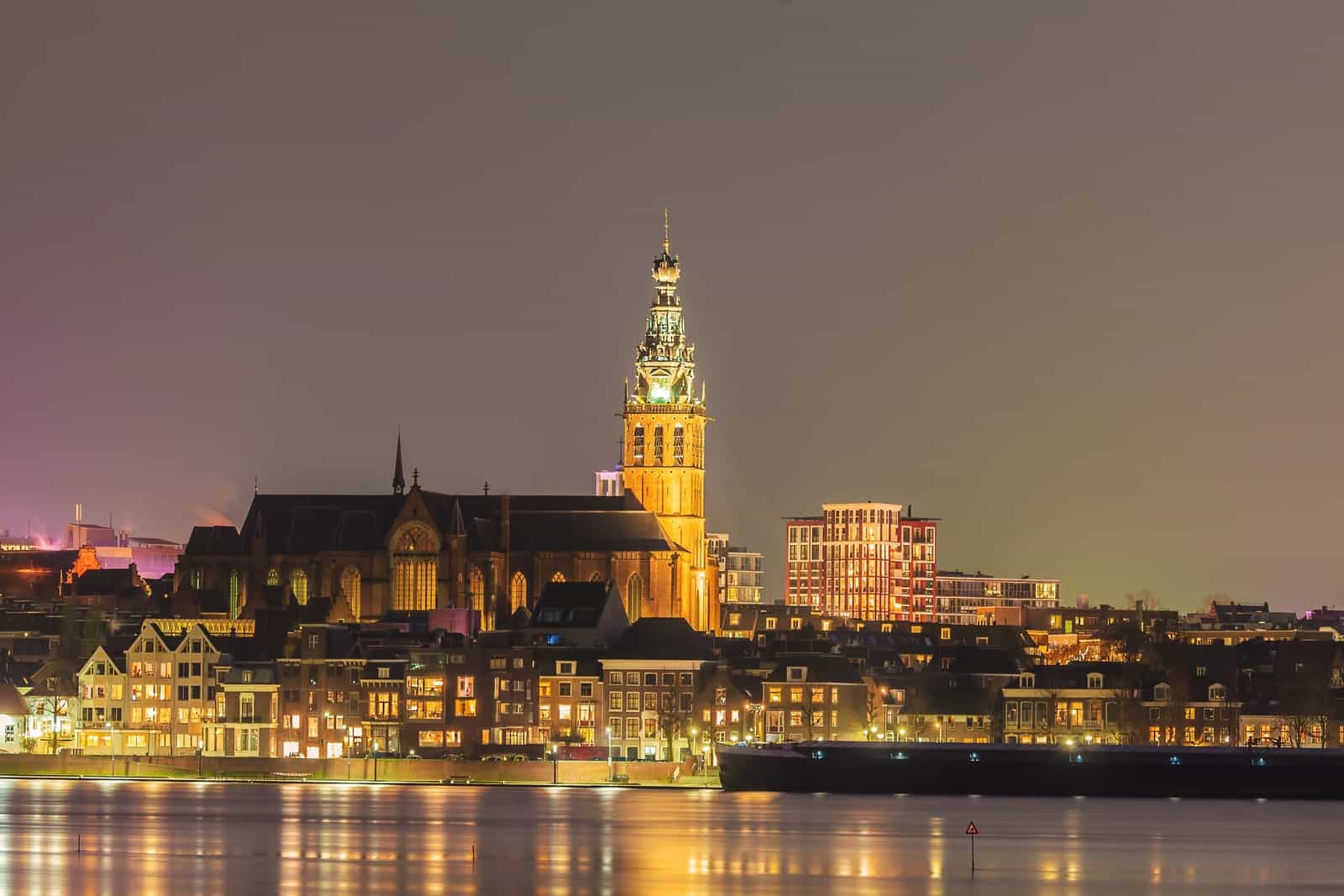
Nijmegen is best known as the oldest city in the Netherlands, but its long history is only part of what makes the city worth visiting. Roman heritage, medieval buildings and traces of the Second World War sit alongside lively shopping streets, museums, street art and an attractive riverfront along the Waal.
The city centre is compact enough to explore on foot, with many of Nijmegen’s main attractions within easy reach of each other.
DISCLOSURE: This post contains affiliate links. If you make a purchase via one of those links, I will earn a commission at no extra cost for you.

How to get to Nijmegen
Nijmegen is easily accessible by public transport and by car from major cities in the Netherlands. The city is also well connected to Amsterdam Schiphol Airport and Eindhoven Airport. Because Nijmegen lies close to the German border, Weeze Airport in Germany is another option and is only about a 50-minute drive away.
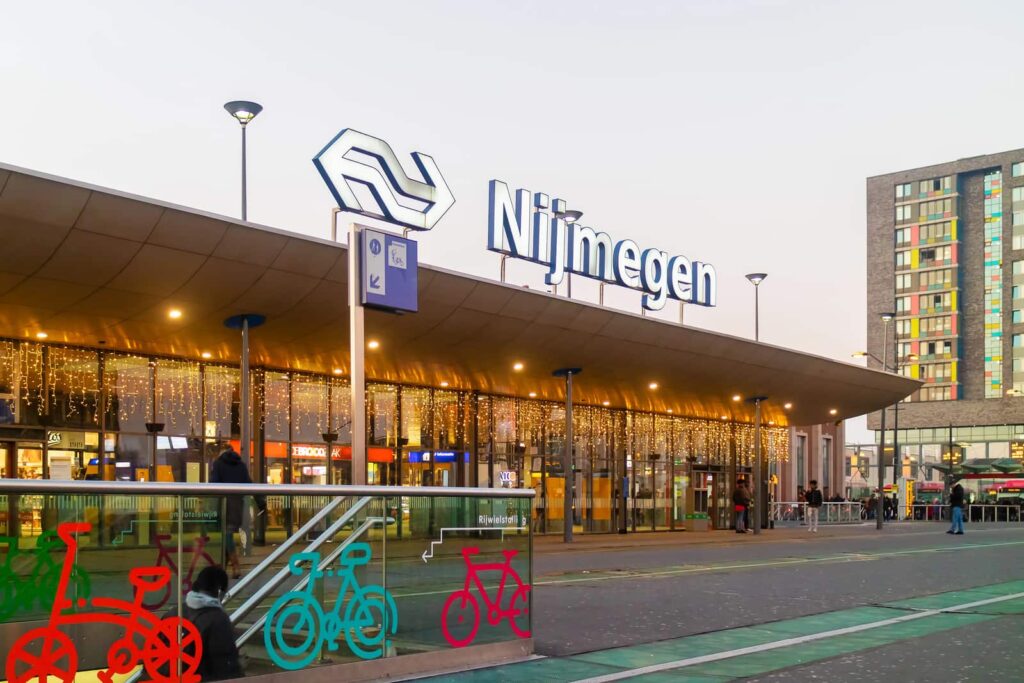
Tip: Read this post about using the public transport in the Netherlands. It’s packed with tips that only a local knows!
- Amsterdam: around 1 hr 30–40 min by train; around 1 hr 30 min by car
- Rotterdam: around 1 hr 30 min by train; roughly the same by car
- The Hague: around 1 hr 40 min by train; around 1 hr 30–45 min by car
- Eindhoven: just under 1 hr by train; around 1 hr by car
- Maastricht: around 2 hrs by train; around 1 hr 30 min by car
Pro tip: Buy your train tickets online with the Dutch Railways (NS) for hassle-free travel. On the website of NS you can also check for any discounts.
Best Things to Do in Nijmegen
Nijmegen has a surprisingly varied mix of attractions, from historic sights and museums to Roman and WWII heritage, the Waal and some more unusual experiences. The map shows where the main sights are located and which ones are easy to combine while exploring the city.
Explore Nijmegen with a local guide
Prefer to get an introduction to the city before exploring on your own? A guided walking tour is a good way to discover Nijmegen’s historic centre and learn more about its long history.
Check availability for the Nijmegen Historic Highlights Tour:
1. Explore the Grote Markt
The Grote Markt is a good place to start exploring historic Nijmegen. The square is surrounded by some of the city’s most interesting old buildings, including De Waagh and the remains of the medieval Lakenhal.
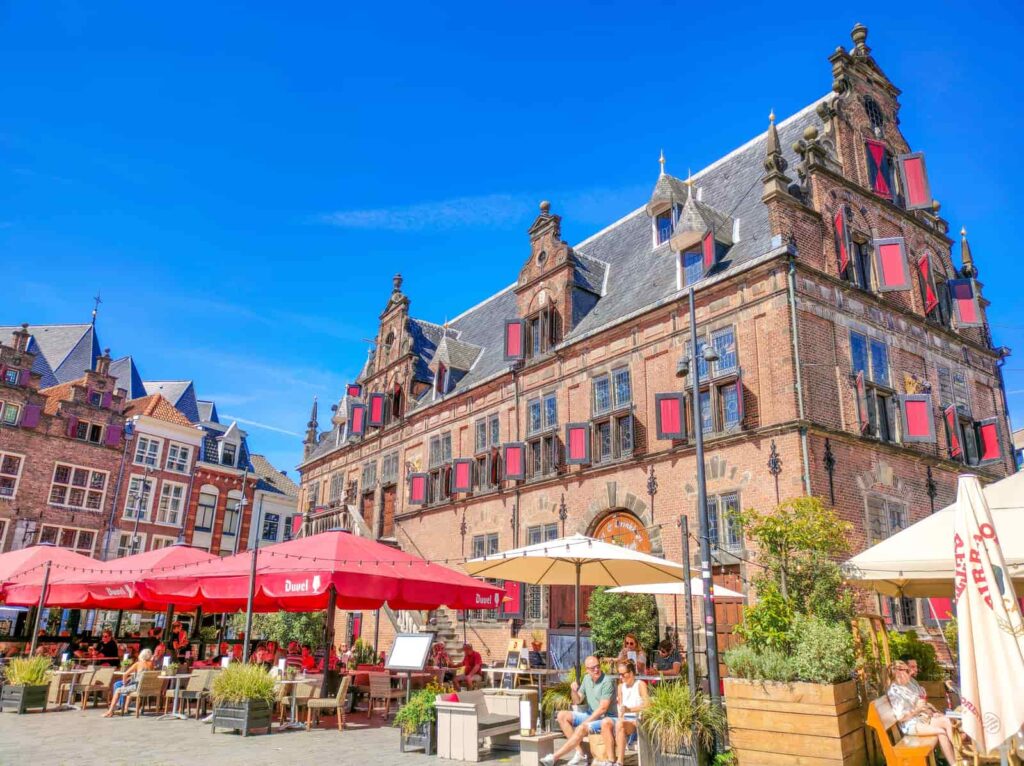
The Lakenhal, or Cloth Hall, was built in the 14th century, when Nijmegen had a flourishing cloth trade. The ground floor consisted of arcades where merchants could trade, while cloth was worked and dyed above. When the cloth trade declined in the 16th century, the large hall gradually lost its original function and was divided into separate properties. Upper floors were altered and added over the following centuries, which explains why today it looks more like a row of individual historic buildings than a single medieval hall.
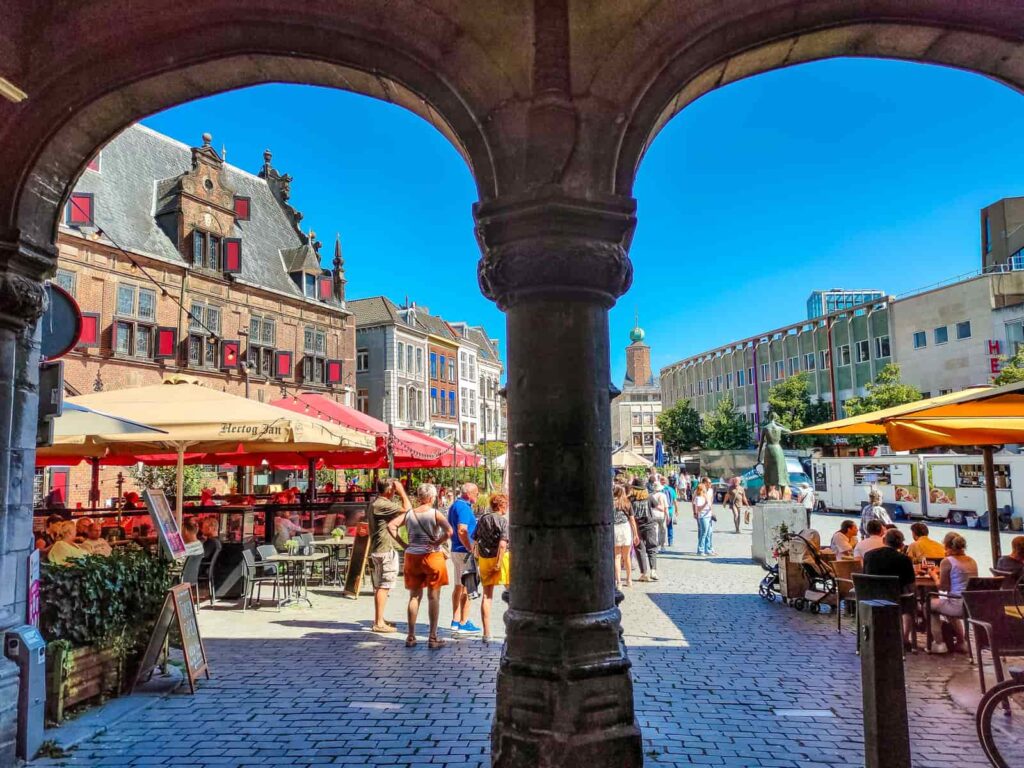
Running through the former Lakenhal is the Kerkboog, the passage connecting the Grote Markt with the Sint-Stevenskerkhof and Stevenskerk. The passage took on its present form in the early 17th century, with rooms constructed above the arch that were later used by Nijmegen’s surgeons’ guild, including for anatomical lessons.
Another part of the former Lakenhal is Café In de Blaauwe Hand, considered the oldest café in Nijmegen. The space has been used as a drinking place since the 16th century and has close ties to the cloth workers who once worked here. Its name refers to the blue-stained hands of the cloth dyers, and inside the café you can still see original pillars from the medieval Lakenhal.
De Waagh, Nijmegen’s historic weigh house, dates from the early 17th century. As in other Dutch trading cities, merchants had their goods officially weighed here before selling them at the market.
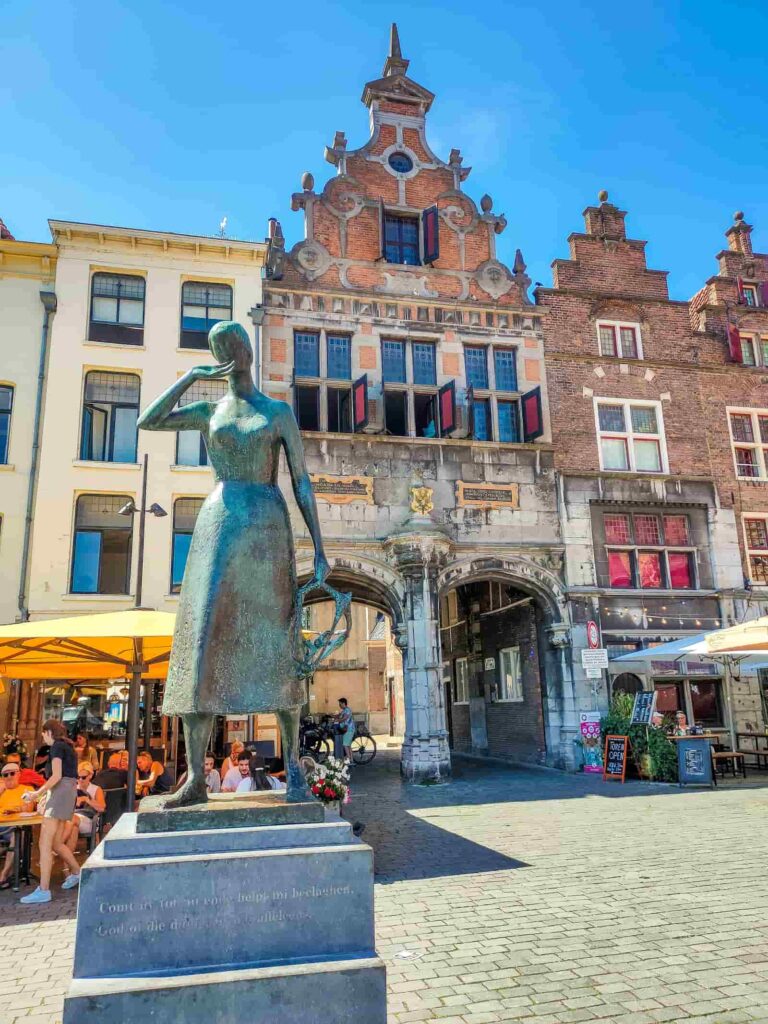
Also look for the statue of Mariken van Nieumeghen, the main character of a late-medieval miracle play associated with Nijmegen. The story of Mariken, who spends seven years with the devil before seeking forgiveness, became one of the best-known works of medieval Dutch literature.
2. Visit Stevenskerk
The St Stephen’s Church (Stevenskerk) dominates Nijmegen’s historic centre from its position on a small hill. Construction began in the 13th century after the city received permission to build a new church on the Hundisburg, and the building was expanded over the following centuries.
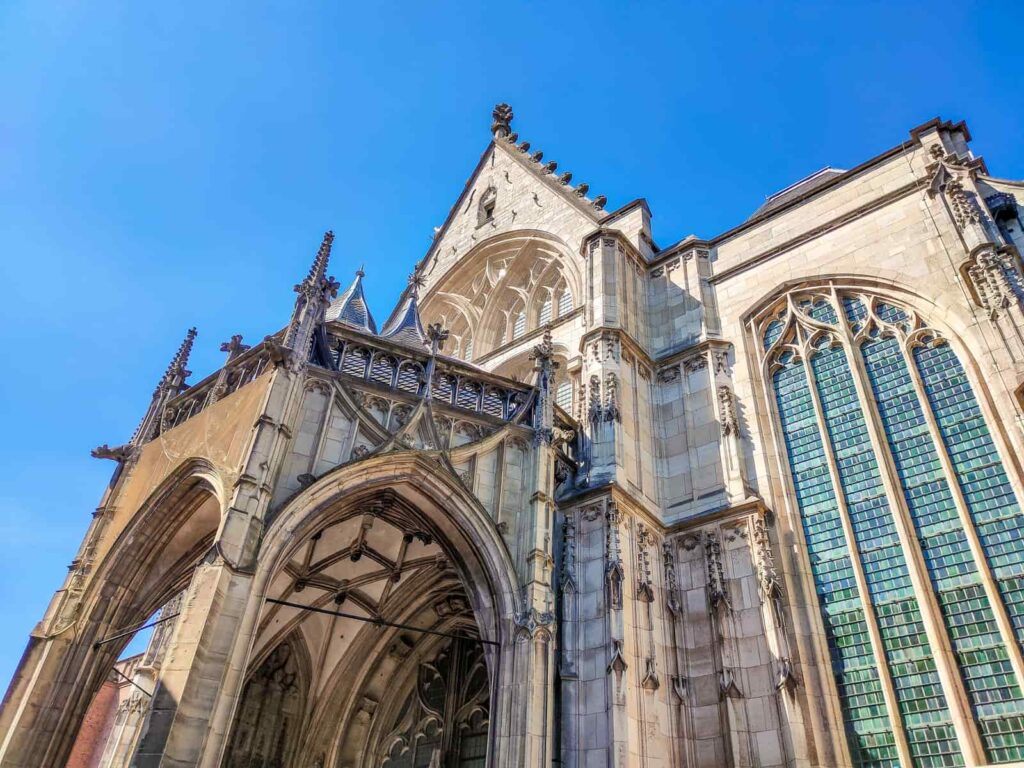
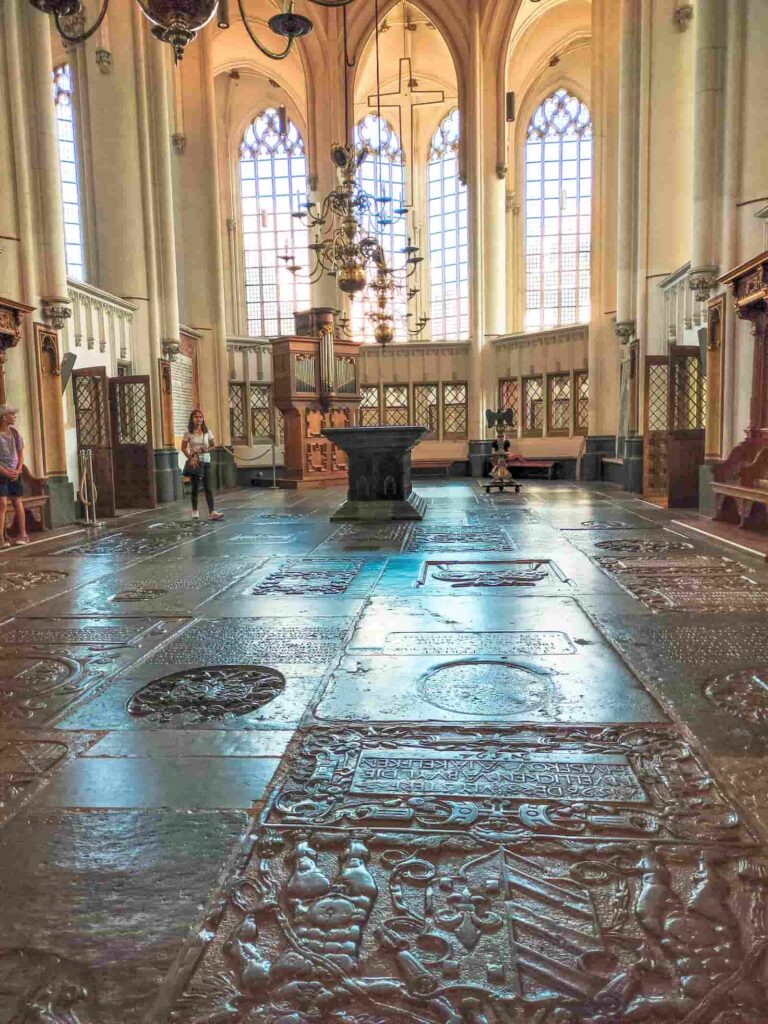
The church was badly damaged during the Second World War and later restored. Inside, you can see its Gothic architecture, the large organ and the tomb of Catherine of Bourbon, Duchess of Guelders.
You can also climb the church tower for beautiful views over Nijmegen and the Waal. Tower access and opening times vary, so it’s worth checking the current schedule before your visit.
Practical info
Address: Sint Stevenskerkhof 62, 6511 VZ Nijmegen
Opening hours: Daily 10:00–17:00; check the current calendar before visiting
Admission: Church free; tower adults €5, children 7–12 €2, children 0–6 free
Tower: Open April–September on selected days; no advance booking required
Website: www.stevenskerk.nl
3. Walk along Lange Hezelstraat
Lange Hezelstraat is one of Nijmegen’s oldest streets and is generally regarded as the oldest shopping street in the Netherlands. Its history stretches back to Roman times, when a road already followed roughly the same route.
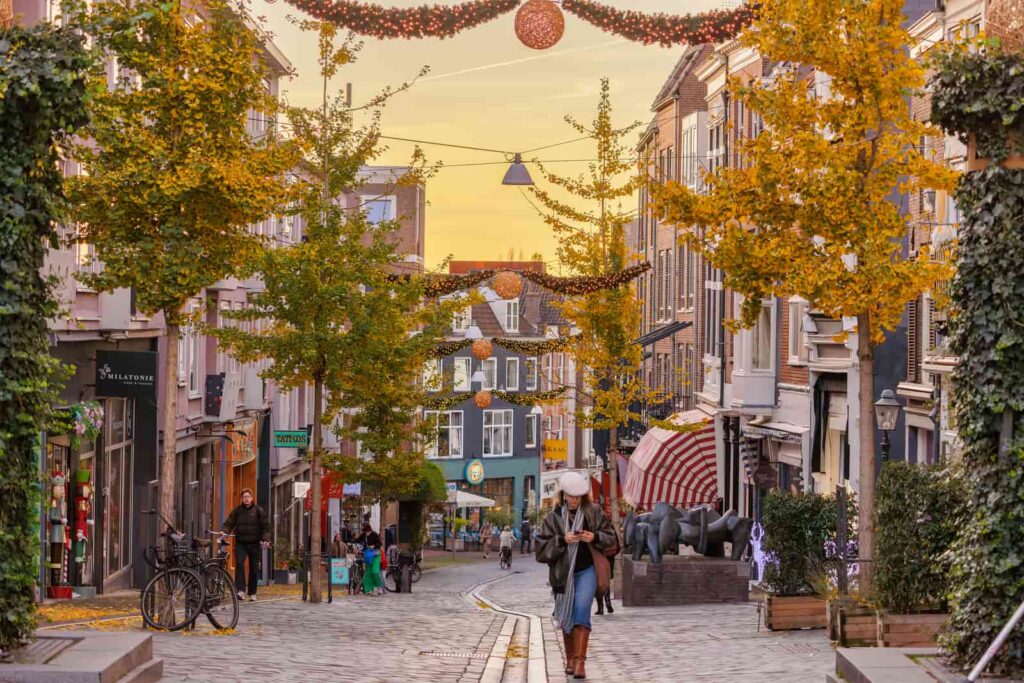
Today, the street is lined mainly with independent shops, cafés and restaurants. It’s a pleasant route through the western side of the historic centre and leads naturally towards Kronenburgerpark.
4. See the Medieval Tower in Kronenburgerpark
Just beyond Lange Hezelstraat, Kronenburgerpark combines a landscaped city park with some of the most visible remains of Nijmegen’s medieval fortifications.
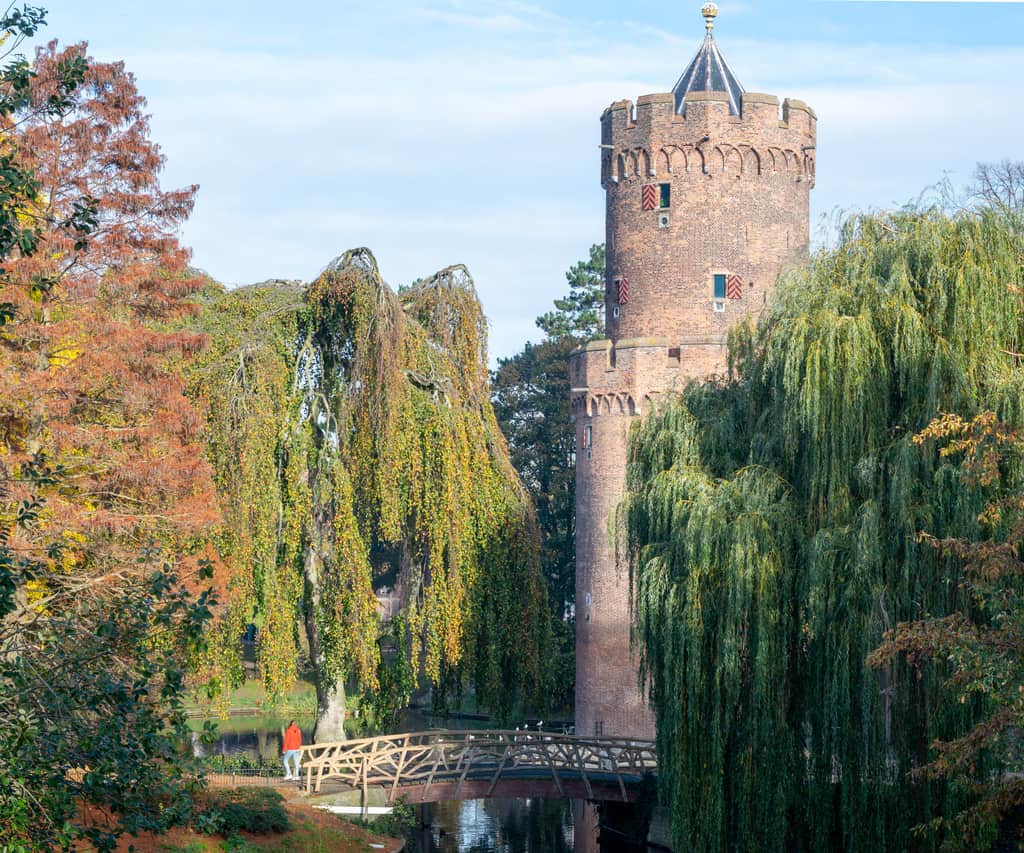
The most striking is the Kruittoren, or Powder Tower, which dates from 1425 and stands about 30 metres high. Sections of the medieval city wall and other defensive remains survive nearby.
The park itself has ponds, lawns and mature trees, making it a good place for a break while walking between the station and the historic centre.
5. Discover the History of Valkhofpark
Valkhofpark occupies one of the most historically important spots in Nijmegen. The Romans established themselves on and around the Valkhof hill, and centuries later Charlemagne had a palace here. A medieval castle eventually occupied the site until it was largely demolished at the end of the 18th century.
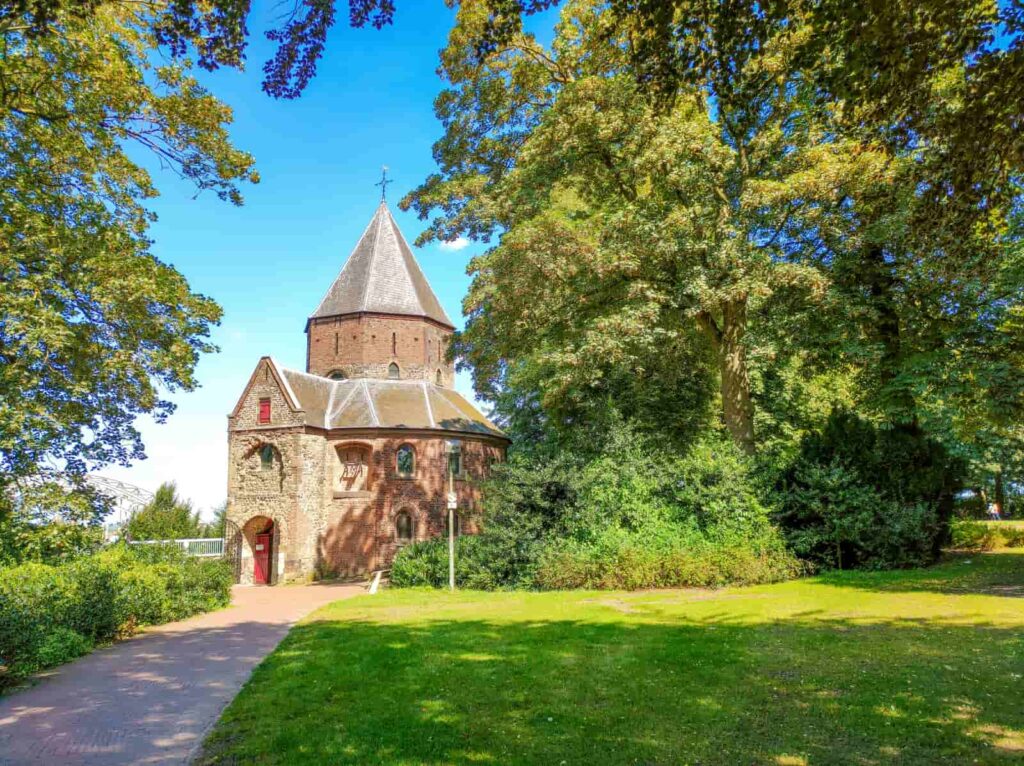
The small St Nicholas Chapel (Sint-Nicolaaskapel) is one of the few structures that survived the demolition. Dating largely from the 11th century, it is one of the oldest surviving buildings in the Netherlands. The chapel has an unusual octagonal central section surrounded by a sixteen-sided outer structure. Parts of the building incorporate Roman materials, another reminder of the much older history of the Valkhof hill.
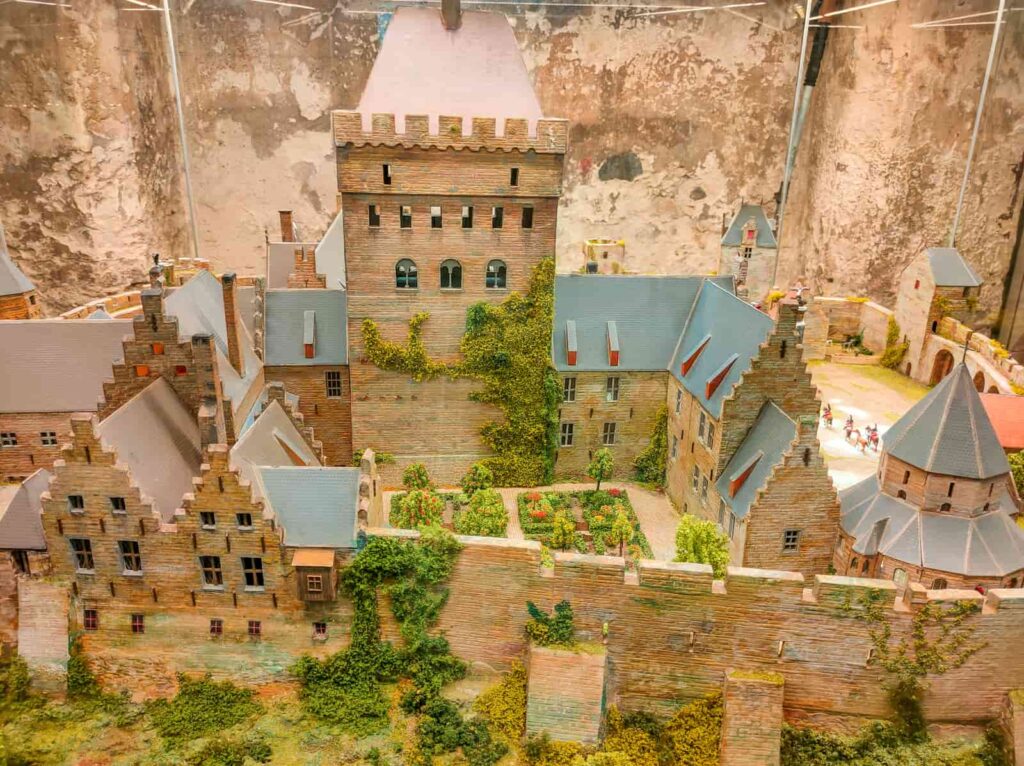
Inside the chapel, you can also see a detailed model of the former Valkhof Castle as it looked in the 17th century. It helps put the surviving chapel and the nearby ruins into context and gives you a much better idea of the scale of the enormous castle complex that once occupied the hill.
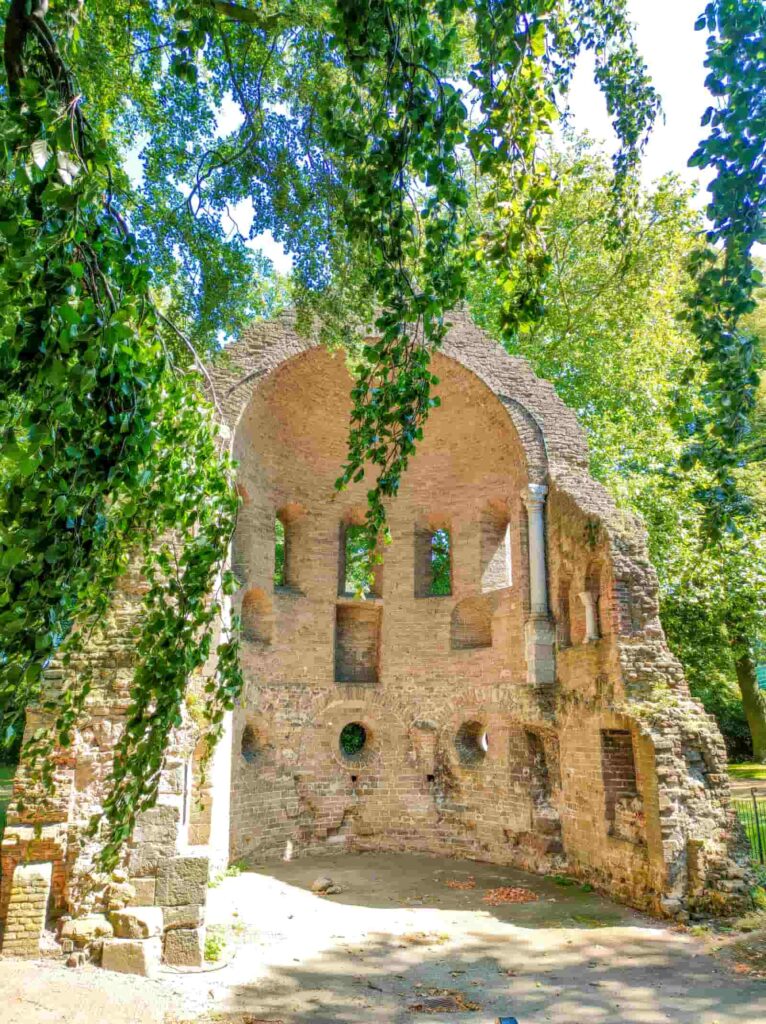
Nearby, the Barbarossa Ruins (Barbarossaruïne) are all that remains of a palace built on the Valkhof in the 12th century under Emperor Frederick Barbarossa. The surviving apse was part of a palace chapel and includes columns and decorative stonework believed to have been reused from earlier buildings on the site. Although only a fragment remains today, it gives a much clearer idea of the importance the Valkhof had as a royal and imperial residence during the Middle Ages.
The park is also worth visiting for its elevated position above the Waal, with beautiful views over the river, the Waalbrug and the northern bank.
6. Visit Valkhof Museum
After a major renovation, Valkhof Museum (Museum Het Valkhof) reopened at Kelfkensbos in June 2026. The striking glass building, originally designed by Dutch architect Ben van Berkel of UNStudio, has been extensively redesigned inside and out. The new museum is lighter and more open, with sightlines between the different floors, a new central staircase and a café and museum shop facing the square.
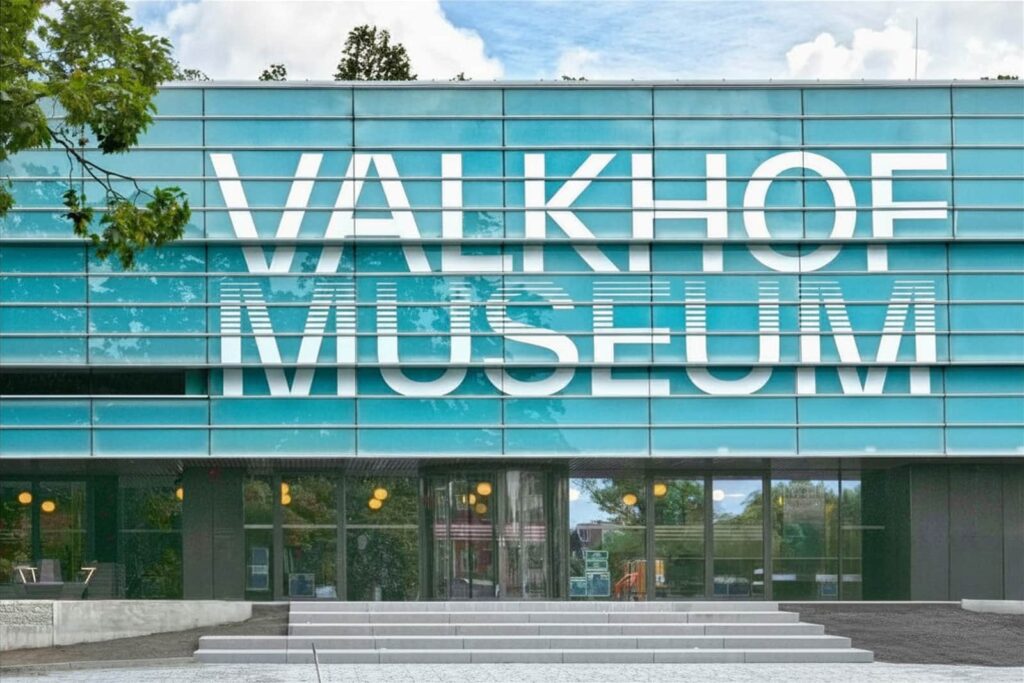
The museum brings together archaeology, history and art, with objects and stories spanning more than 40,000 years. Rather than separating these into traditional collections, the new presentation connects different periods and perspectives. Its main collection presentation, Where People Meet (Mens op de grens), explores the people who have lived in and around Nijmegen and the borders they encountered, crossed or created.
Alongside the collection presentation, Valkhof Museum hosts changing exhibitions on archaeology, history and contemporary art. Check the museum’s programme before your visit to see which temporary exhibitions are running.
Practical info
Address: Kelfkensbos 59, 6511 TB Nijmegen
Opening hours: Tuesday–Friday 11:00–17:00; Saturday–Sunday 10:00–18:00; closed Monday
Admission: Adults €19.50; children 0–17 free; students €9.75
Booking: Tickets have a timed entry slot
Website: valkhofmuseum.nl
7. Discover Nijmegen’s Roman Past and UNESCO World Heritage
Nijmegen was known to the Romans as Noviomagus and developed into one of the most important Roman centres in what is now the Netherlands. Its strategic position near the Rhine frontier led to the construction of military camps, temples, baths and even an amphitheatre large enough to accommodate thousands of people.
Several archaeological sites in and around Nijmegen are now part of the Frontiers of the Roman Empire – Lower German Limes, which was added to the UNESCO World Heritage List in 2021.
Don’t expect large Roman ruins standing above ground. Much of Nijmegen’s Roman archaeology remains hidden beneath the modern city. One notable exception can be seen at De Bastei, where remains of a late-Roman gate and defensive wall are incorporated into the museum. The gate and associated wall are the only visible Roman-era structural remains in Nijmegen, and they form part of the UNESCO World Heritage Site.
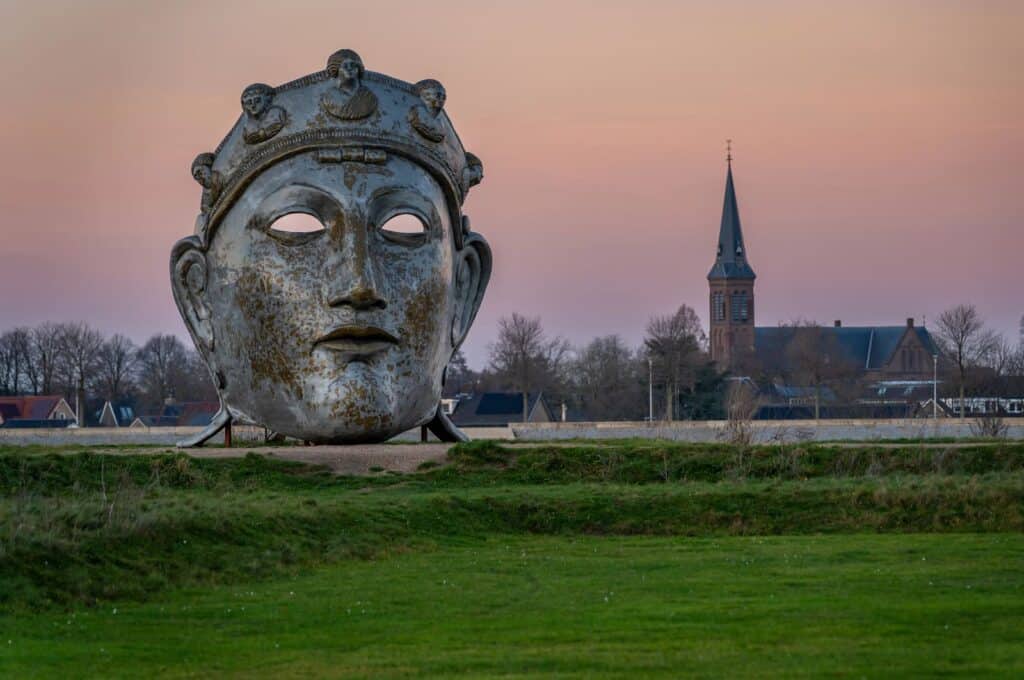
Other traces of Roman Nijmegen are easier to find in museums and public art. Valkhof Museum displays archaeological finds from the Roman period, while across the Waal on Veur-Lent, the enormous Face of Nijmegen sculpture by Andreas Hetfeld was inspired by the Roman cavalry mask now held by the museum.
Tip: Want to understand how Nijmegen fits into the much larger Roman frontier? Read more about the Lower German Limes in the Netherlands.
8. Go Underground at De Bastei
At the foot of the Valkhof hill, De Bastei is built around more than 2,000 years of Nijmegen’s history. Instead of displaying archaeological remains in cases alone, the museum allows you to walk through the actual layers of buildings and fortifications that occupied this spot beside the Waal.
Among them are the Roman wall and gate mentioned above, medieval remains and the Stratemakerstoren, a 16th-century defensive tower built as part of Nijmegen’s city walls. You can walk through its vaulted cannon passage and casemates, where artillery once protected the city against attacks from the river. De Bastei takes its name from this type of large defensive structure and is the only surviving example in the Netherlands.
The museum also explores the natural history of the Waal and the landscape around Nijmegen. Its permanent Oergrond exhibition helps explain why this particular location beside the river became so important in the first place.
Practical info
Address: Lange Baan 4, 6511 XJ Nijmegen
Opening hours: Daily 10:00–17:00
Admission: Adults €15; children 4–17 €8.50; students €8.50
Website: www.debastei.nl
9. Experience Nijmegen Differently at muZIEum
muZIEum is a unique museum dedicated to experiencing the world from the perspective of people who are blind or visually impaired. One of its main experiences is Expedition in the Dark (Expeditie in het donker), where you enter complete darkness and have to rely on your other senses instead of your sight.
You are guided by someone who is blind or visually impaired as you find your way through different situations without being able to see. Everyday actions suddenly become much less straightforward, making this a very different experience from a conventional museum visit.
The experience isn’t limited to the museum. Expedition Ribbelroute (Expeditie Ribbelroute) takes you outside into Nijmegen for a 90 to 120-minute route using augmented reality. Along the way, you experience the city from a different perspective and encounter some of the obstacles faced by people with a visual impairment.
muZIEum also hosts Unseen, an inclusive photography exhibition designed so that photography can be experienced in different ways, including by people who are blind or visually impaired.
Practical info
Address: Ziekerstraat 6B, 6511 LH Nijmegen
Opening hours: Daily 09:30–17:00
Admission: Exhibition: adults €15, children 8–12 €10; expedition + exhibition: adults €28, children 8–12 €23
Booking: Advance booking with a time slot is recommended for the expeditions (available in Dutch, English and German)
Website: muzieum.nl
10. Learn about Nijmegen during WWII at Infocentrum WO2
The WWII Information Centre (Infocentrum WO2 Nijmegen) tells the story of Nijmegen and the surrounding area during the Second World War. That history is particularly significant here. On 22 February 1944, an Allied bombing raid devastated large parts of Nijmegen and killed hundreds of people. Later that year, the city played an important role in Operation Market Garden and remained close to the front after its liberation.
The centre uses several interactive presentations to bring this history closer. The Experience introduces you to Nijmegen and the surrounding region during the war, while a large interactive wall lets you explore important events and locations on a map. There is also The Mystery (Het Mysterie) and a hologram presentation where you can examine Second World War objects in 3D.
Infocentrum WO2 is also a starting point for historical walks through Nijmegen, allowing you to connect the stories inside the centre with places around the city.
For a much more extensive museum devoted to the war and liberation, you can also visit the Freedom Museum (Vrijheidsmuseum) in Groesbeek, just outside Nijmegen.
Practical info
Address: Ridderstraat 27, 6511 TM Nijmegen
Opening hours: Monday–Saturday 10:00–17:00; Sunday 12:00–17:00
Admission: Free
Website: infocentreww2.com
11. Discover Dutch Cycling History at Velorama
It would be difficult to find a more appropriate country for a museum devoted entirely to bicycles. National Bicycle Museum Velorama (Nationaal Fietsmuseum Velorama) has a collection of historic bicycles that traces the development of cycling from the earliest designs to the familiar bicycle.
The collection includes unusual early models such as balance bikes and high-wheel bicycles, as well as later bicycles that show how cycling gradually developed into everyday transport. The museum also contains cycling accessories, posters and other objects connected with bicycle history.
Velorama occupies a historic building close to the Waal, so it’s easy to combine with De Bastei and a walk along the Waalkade.
Practical info
Address: Waalkade 107, 6511 XR Nijmegen
Opening hours: Daily 12:00–17:00
Admission: Adults €11; children under 18 €7; students €8; seniors 65+ €8
Website: velorama.nl
12. Walk along the Waalkade
Running beneath the historic centre, the Waalkade is Nijmegen’s riverside promenade and one of the best places to experience the city’s relationship with the Waal. From here you can watch the heavy river traffic, look across towards Veur-Lent and see the Waalbrug, one of Nijmegen’s best-known landmarks.
The Waalkade is also a popular place to stop for something to eat or drink, with numerous restaurants, cafés and terraces overlooking the river. Especially when the weather is good, the terraces give the riverside a lively atmosphere.
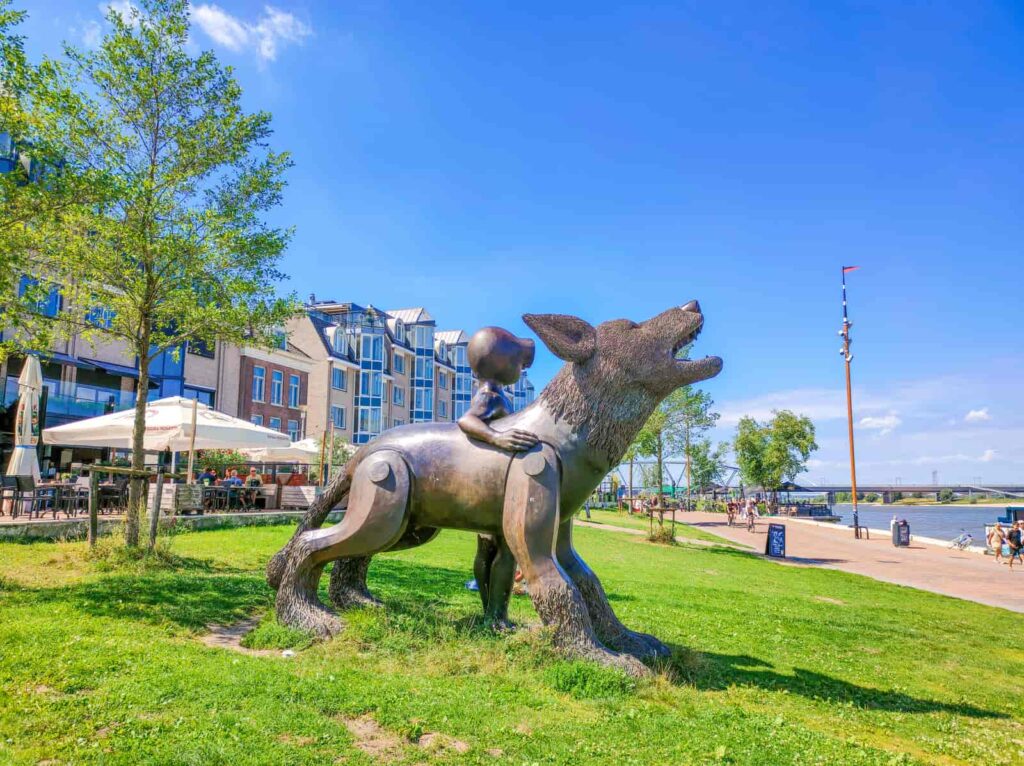
Several attractions in this guide are located along or close to the Waalkade. De Bastei and Velorama are here, while the Pancake Boat departs from the riverside. Continuing along the river also brings you to the Besiendershuis.
It’s worth walking this stretch even if you’re not visiting any of the museums. The combination of the river, bridges, terraces and views towards the opposite bank makes the Waalkade one of the most attractive parts of Nijmegen.
13. See the Unusual Besiendershuis
Close to the Waalkade stands the Besiendershuis, one of Nijmegen’s more unusual historic buildings. The house dates from 1525 and was built in the Lower Rhine Gothic style, with a distinctive stepped façade that makes it stand out from the surrounding buildings.
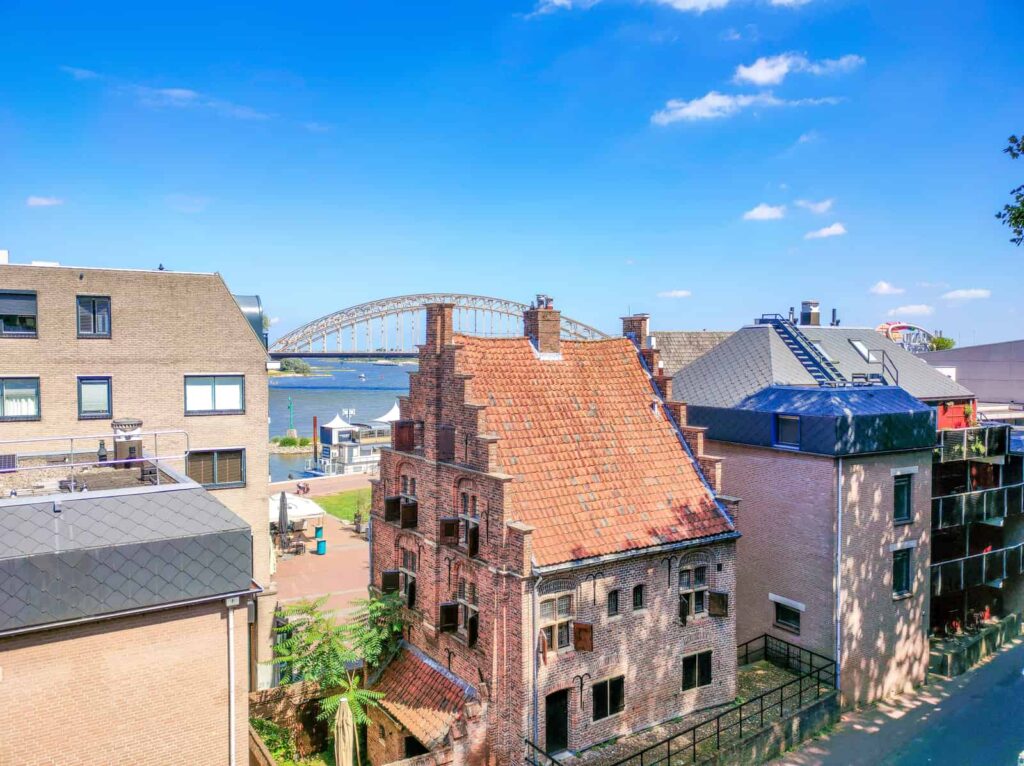
Its name is traditionally linked to the besiender, an official who inspected passing ships and collected or controlled tolls on the Waal. Despite the story, there is no evidence that a besiender actually lived in the house. One of its most interesting architectural features is the hanging room (hangkamer), which is suspended within a larger space rather than supported from below.
Today, the Besiendershuis has a cultural role. It is used as an artist-in-residence and cultural project space, hosting artists and other makers and organising programmes connected with Nijmegen and the city.
14. Cruise the Waal on the Pancake Boat
One of the most enjoyable ways to see Nijmegen from the water is aboard the Pancake Boat Nijmegen (Pannenkoekenboot Nijmegen). The 75-minute cruise takes you along the Waal while you eat unlimited freshly baked Dutch pancakes.
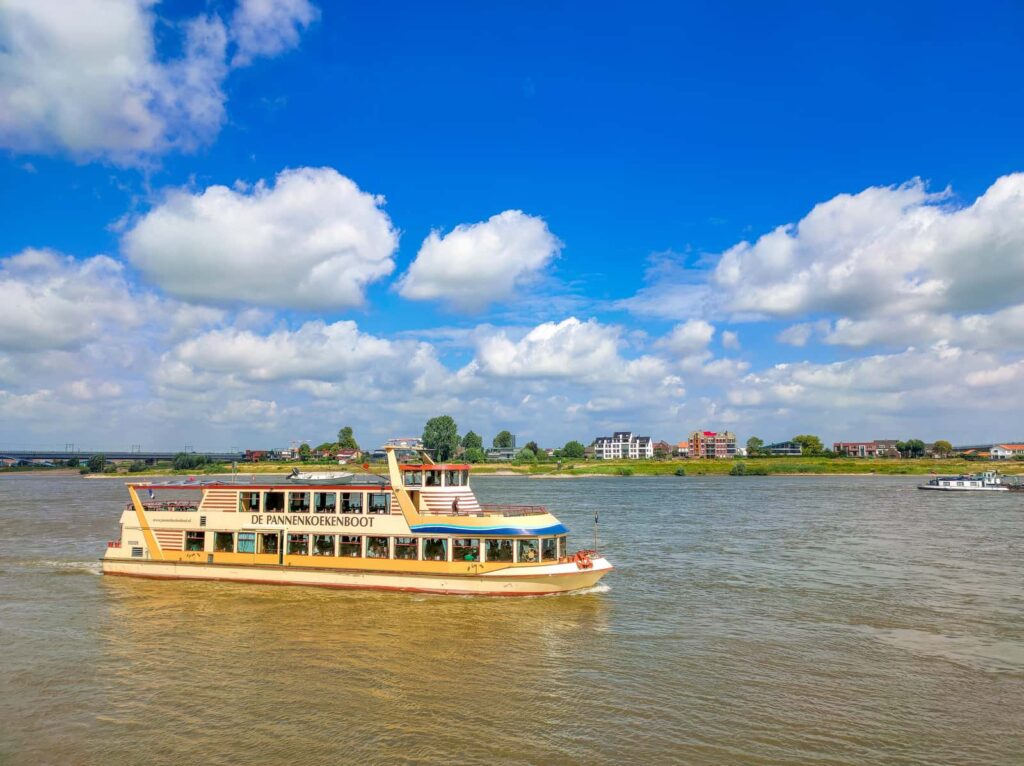
If you’ve never tried a Dutch pancake before, don’t expect the thick and fluffy American version. Dutch pancakes (pannenkoeken) are large and relatively thin, usually covering most of the plate, but they’re more substantial than French crêpes. They can be sweet or savoury, with traditional combinations ranging from syrup and apple to bacon and cheese.
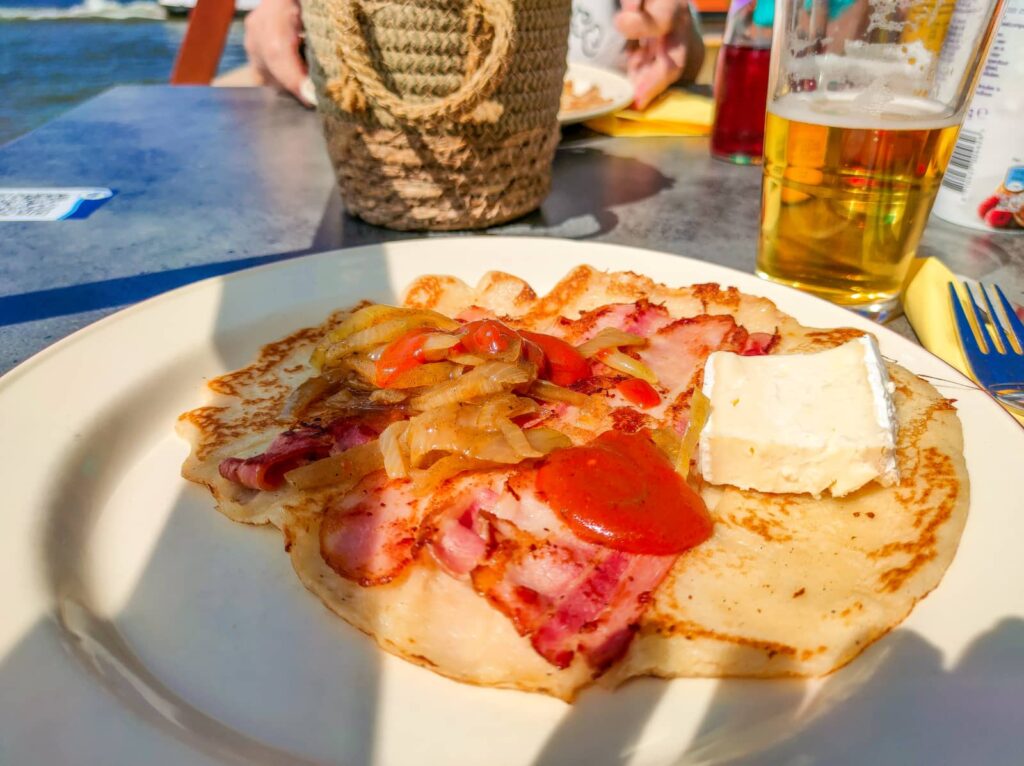
During the cruise, you get a different perspective on the Nijmegen skyline and its bridges, while children can make use of the ball pit in the hold of the ship.
Buy here your tickets for the Pancake Boat experience in Nijmegen!
Practical info
Departure: Waalkade opposite Holland Casino, 6511 XR Nijmegen
Duration: 75 minutes
Admission: Weekdays: adults €27.50, children 3–11 €22.50; weekends: adults €29, children 3–11 €24; children under 3 free
Booking: Advance booking recommended
15. See Nijmegen’s Iconic Waalbrug
The Waalbrug is one of Nijmegen’s most recognizable landmarks. The steel arch bridge opened in 1936, creating an important new road connection across the Waal and becoming a defining feature of the city’s riverfront.
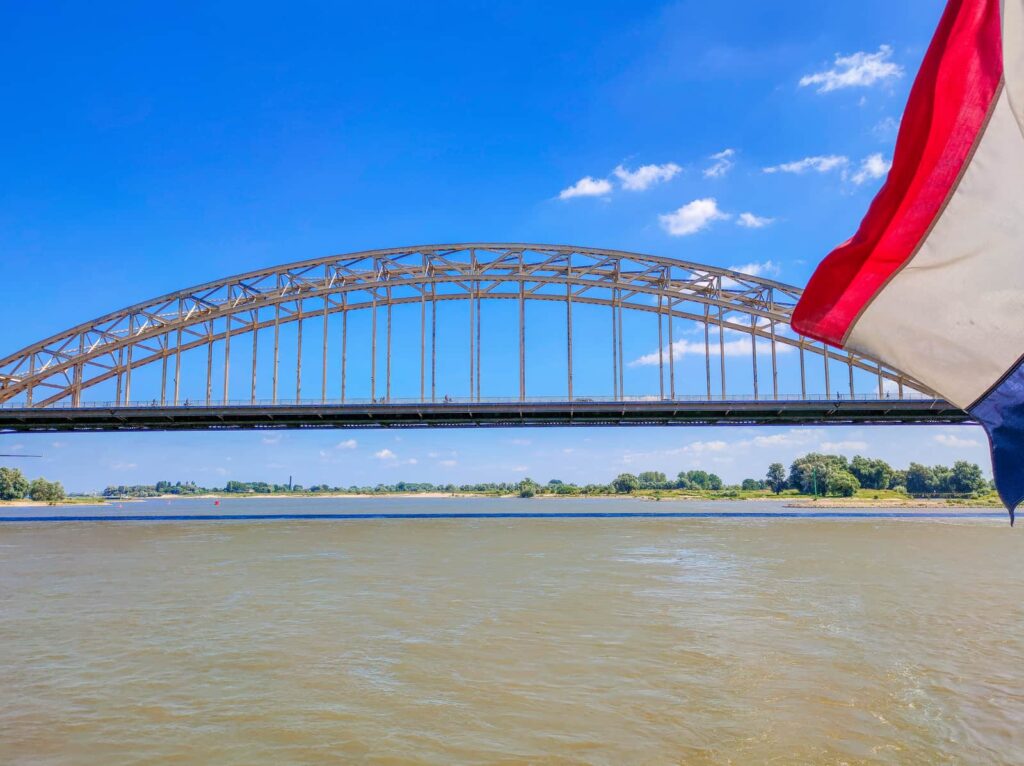
The bridge played an important role during Operation Market Garden in September 1944, when Allied forces fought to capture the bridges across the Waal. The Waalbrug survived the fighting and became an important route for the Allied advance.
Today, the bridge is also worth seeing for its setting. From the pedestrian path, you get excellent views over the Waal, the Waalkade and Nijmegen’s historic skyline, as well as Veur-Lent on the opposite side of the river.
16. Cross the River and Enjoy the Beach
Cross the Waal and Nijmegen suddenly feels very different. From the city centre, you can walk or cycle across De Snelbinder, the pedestrian and cycle bridge beside the railway bridge, and descend onto Veur-Lent. The island can also be reached via the Waalbrug and several other bridges, making it easy to include in a longer walk or cycling route.
Veur-Lent is an elongated island between the Waal and the Spiegelwaal, a side channel excavated as part of Nijmegen’s major flood-protection project. The channel gives the river more room during periods of high water and transformed the area opposite the historic city into a large river park.
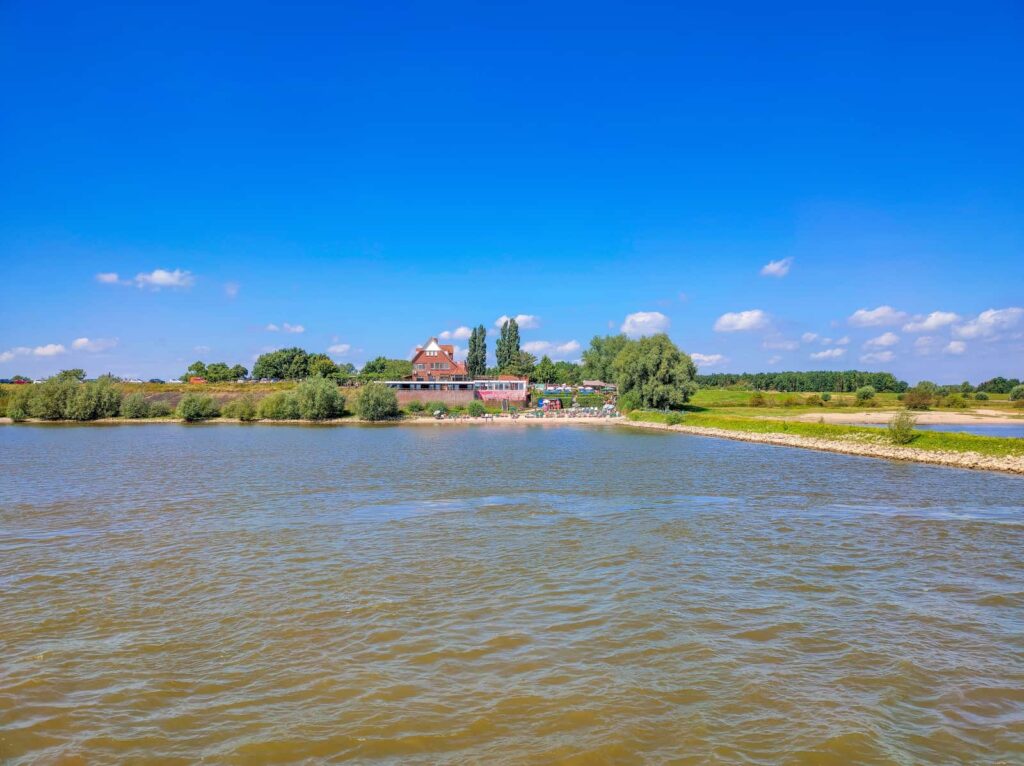
Along the Waal side of Veur-Lent, you’ll find stretches of sandy beach where you can walk beside the river, relax when the weather is good and enjoy the views back towards Nijmegen.
This is also where you’ll find the enormous Face of Nijmegen sculpture mentioned earlier. From Veur-Lent, you get some of the best views of Nijmegen’s skyline, the Waalbrug and the historic centre rising above the river.
17. Discover Nijmegen’s Street Art
Nijmegen has a substantial collection of street art spread across the city, so it’s worth looking beyond the historic buildings and museums. An established Street Art Walking Route covers about 4.1 kilometres and takes you past 35 works, making it possible to explore a different side of the city on foot.
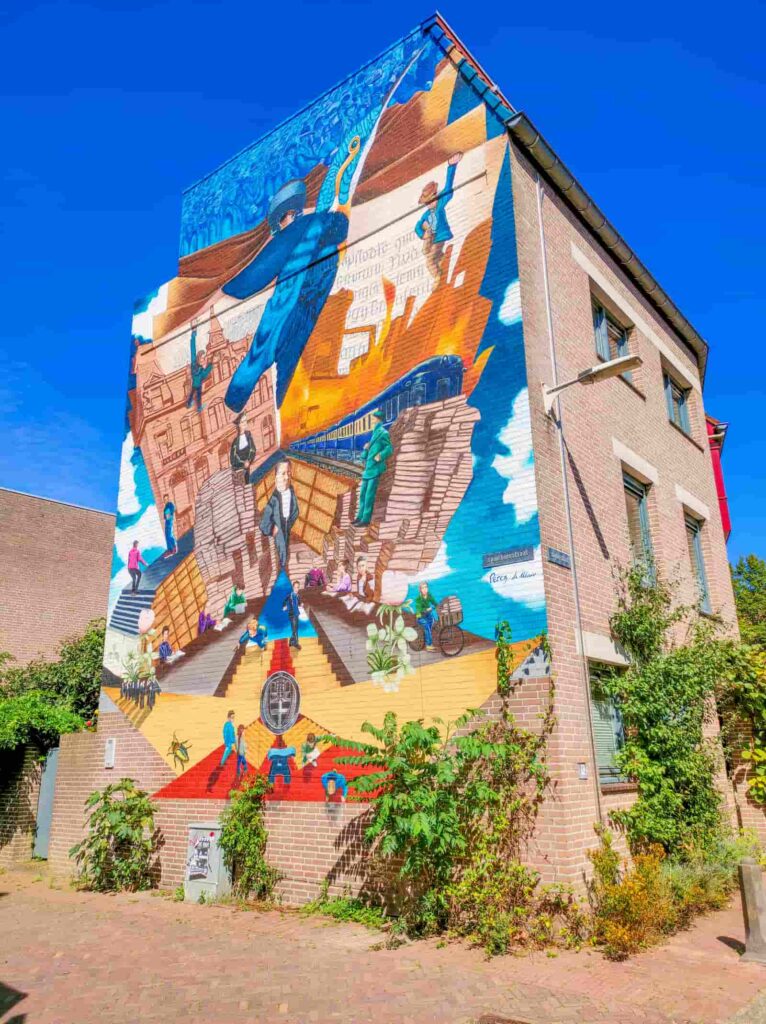
Some of Nijmegen’s murals also tell stories from the city’s past. The Waalpaintings project uses large murals to bring local history into the streets, with subjects ranging from Roman Nijmegen and Charlemagne to the Peace of Nijmegen, the Four Days Marches and Operation Market Garden.
You don’t need to complete the entire street-art route to see some of the works. It can also be combined with other sightseeing as you move through the city.
18. Fun Ways to Explore Nijmegen
If you want to explore Nijmegen beyond simply walking from one attraction to the next, there are several more unusual ways to discover the city.
A good free option is the Walk of the Town, a 7-kilometre route marked through the streets of Nijmegen. You don’t need an app or guide: you simply follow the line and arrows through the city. The route is divided into a 3-kilometre lower loop along the Waal and a 4-kilometre upper loop through the city centre and Kronenburgerpark. Along the way, information panels, artworks and audio stories introduce you to Nijmegen’s history and culture.
You can also join a guided city walk, or turn your sightseeing into a game with one of the city games and scavenger hunts available in Nijmegen.
Another way to discover Nijmegen is through its food. A three-course food tour combines exploring the city with a meal served at different stops along the way. The three-hour experience is offered for private groups and is a good option if you want to combine sightseeing with trying some of Nijmegen’s food scene.
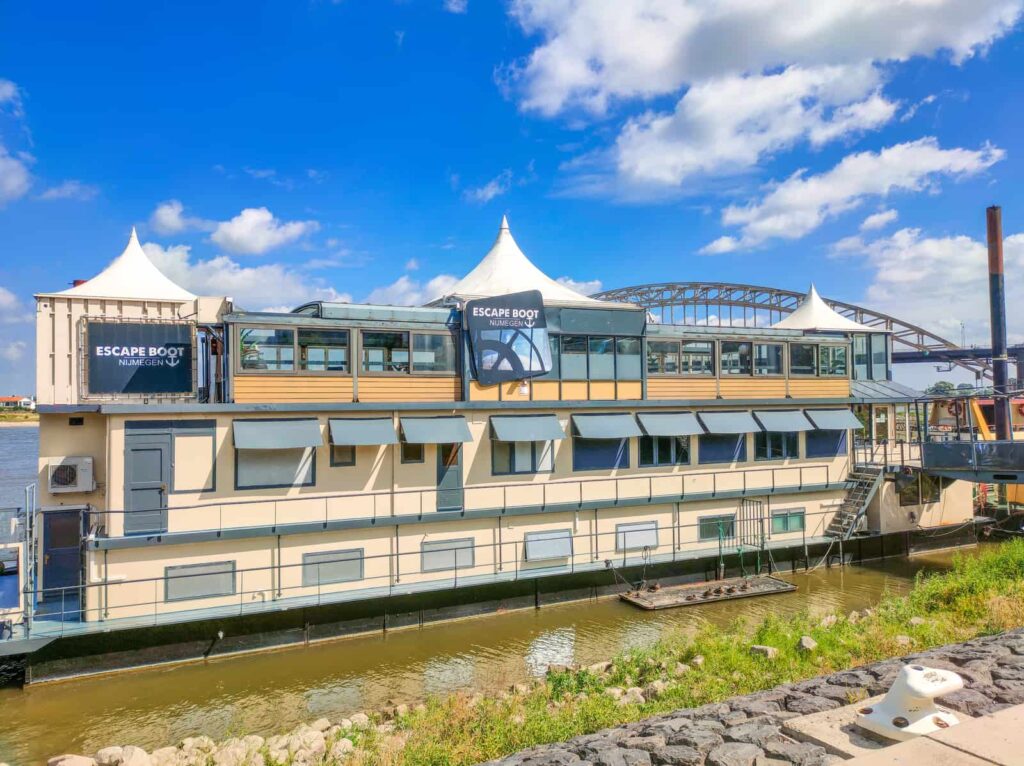
For something completely different, try Escape Boot Nijmegen, an escape-room venue aboard a ship on the Waalkade. Its four rooms are inspired by the Titanic and include the Royal Suite, Captain’s Room, Crew Cabin and Wheelhouse. All four escape rooms can be played in English.
19. Visit Museumpark Orientalis
Just outside Nijmegen, Museumpark Orientalis is an unusual open-air museum set in a large wooded landscape. Its origins go back more than a century, when the site was created to recreate places associated with the life of Jesus and help Dutch pilgrims imagine the landscapes and cultures of the Holy Land. Some of the historical villages and buildings created during those early years are now protected national monuments.
Over time, the museum developed far beyond its original focus. Today, its historical starting point is the three monotheistic religions of Judaism, Christianity and Islam, while the museum also explores other religions, worldviews, rituals, traditions and pilgrimage.
What makes Orientalis particularly interesting is the combination of cultural history, religion and architecture. Rather than experiencing everything through display cases, you walk through reconstructed historical environments spread across the park and learn how religion, traditions and everyday life have influenced different cultures.
Practical info
Address: Profetenlaan 2, 6564 BL Heilig Landstichting
Opening hours: Tuesday–Sunday 11:00–17:00, from 1 March to 2 November
Admission: Adults €16; children 4–15 €8; children 0–3 free; students €12.50
Website: museumparkorientalis.nl
Is Nijmegen Worth Visiting?
Yes, Nijmegen is well worth visiting, especially if you are interested in history and culture. As the oldest city in the Netherlands, it has an unusually rich past, with traces of the Roman era, the Middle Ages and the Second World War all forming part of the city you see today.
But Nijmegen isn’t interesting only because of its history. The museums, independent shops, street art and lively Waalkade give the city a more contemporary side, while the Waal and the beaches around Veur-Lent add something you don’t find in many Dutch cities.
Nijmegen also feels quite different from the better-known destinations in the western Netherlands. It combines more than 2,000 years of history with a relaxed riverside atmosphere, which makes it a very rewarding city to explore.
Do you need some extra help to plan your trip to the Netherlands? Join the dedicated Exploring the Netherlands Facebook Group, where you can get tips from other travellers and locals. Or perhaps you have questions or comments? Join the group and I’ll be happy to answer them.
