

Amsterdam is one of the best cities in Europe to explore on foot. With its compact historic centre, scenic canals, and short distances between major sights, walking lets you experience the city at a relaxed pace.
In this guide, you’ll find 4 easy, self-guided Amsterdam walking routes, all starting at Amsterdam Central Station and ending near the Rijksmuseum. Along the way, you’ll pass iconic landmarks, historic churches, lively squares, and some of the city’s most photogenic canal views.
You can follow one route from start to finish or combine parts of different walks, depending on where you’re staying and how much time you have. A Google Map is included for each route, so you can easily follow the walks on your phone – even offline.
DISCLOSURE: This post contains affiliate links. If you make a purchase via one of those links, I will earn a commission at no extra cost for you.
How to Use These Amsterdam Walking Routes
Each route is designed to guide you between major sights, but you’re free to slow down, detour, or skip sections along the way. The goal isn’t to follow a line perfectly, but to enjoy Amsterdam at street level.
All 4 walking routes are included in one Google Map. The routes are color-coded and added as separate layers, so you can easily turn individual walks on or off.
Tip: Download the Google Map in advance and use it offline if you don’t have mobile internet during your stay.
Planning your time in the city? These guides help you decide where to stay, how to get around, and which museums to prioritise.
Prepare for your trip to Amsterdam:
❒ How to Use the Public Transport in Amsterdam and the Netherlands
❒ Where to stay in Amsterdam – the Ultimate Guide
❒ Amsterdam in One Day – Best Things to See and Do
❒ Art Museums in Amsterdam – the Ultimate Guide
❒ A Comprehensive Guide of All Amsterdam Museums

Amsterdam Walking Route 1
Amsterdam Walking Route 1 is perfect for your first walk through the city. Starting at Central Station, it leads through the historic centre past canals, churches, and key landmarks, ending near the museum district. An easy route that gives you a great first impression of Amsterdam.
Amsterdam Central Station (Amsterdam Centraal)
If you are arriving at Amsterdam Central Station, make sure you turn around and have a look at the building. It is one of the most beautiful buildings in Amsterdam! Designed by the famous Dutch architect Pierre Cuypers, it opened in 1889. As the last years the building is undergoing continuous renovation and modernization, the area in front of it might seem a bit like a construction site.
Fun fact: Pierre Cuypers is the architect of the dreamy De Haar Castle near Utrecht.
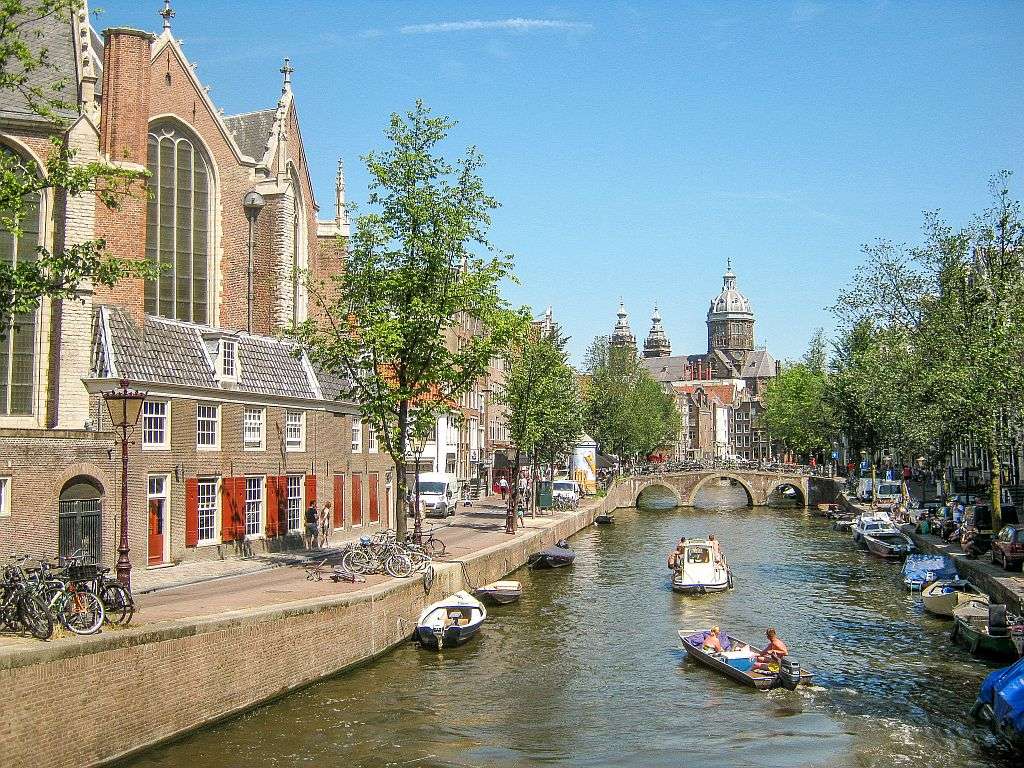
Church of Saint Nicholas (Basiliek van de Heilige Nicolaas)
This beautiful basilica church is quite often overlooked by tourists. It was built in Neo-baroque style at the end of the 19th century and features a dome with amazing stained glass. Step inside to admire the richly decorated interior and enjoy a moment of calm just outside the busy area around Central Station.
TheWeigh House (De Waag)
De Waag, or the Weigh House, is one of the most iconic buildings in Amsterdam. It was built in the 15th century and was part of the city walls, serving as a gate. Until the 18th century it was a weigh house and today there is a restaurant housed in the building.

Southern Church (Zuiderkerk)
Zuiderkerk, or the Southern Church, was built at the beginning of the 17th century and served as a church until 1929. It was restored in the 1970s. Its beautiful church tower dominates the whole area, serving as one of the most photographed landmarks in Amsterdam. Today the former church is used as a venue.
Fun fact: French impressionist Claude Monet painted the Zuiderkerk when he visited Amsterdam.
Lock Keeper’s House (De Sluyswacht)
De Sluyswacht (the lock keeper’s house) is a super cute wooden house on St. Antoniesluis. It looks as if it’s gonna collapse any minute, so much tilted it is. But it still stands there since 1695 when it was built. Today, there’s a cafe in there. It makes the perfect stop to get some refreshments. It’s a bit touristy, but it’s so iconic, that if there’s a free spot when you pass by, you need to stop and a grab a coffee or whatever you feel like .
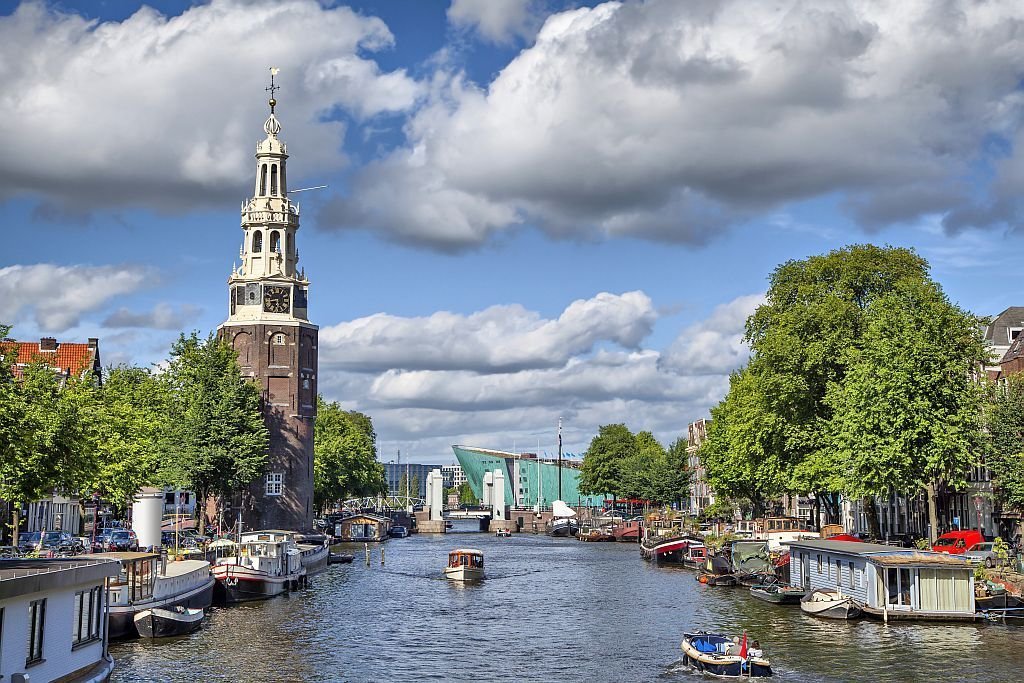
Tip: If you stand in front of the Sluyswacht on the other side of the canal and look to your left, there’s a beautiful view of the Montelbaan Tower (Montelbaanstoren) and the futuristic NEMO Science Museum behind it.
Rembrandt House Museum (Museum Het Rembrandthuis)
Rembrandt House Museum is the former home of the famous Dutch painter Rembrandt, who lived here between 1639 and 1656, during one of the most productive periods of his career. The house has been carefully restored and furnished to reflect life in the 17th century, giving you a good sense of how the artist once lived and worked. Today, it functions as a museum where you can learn more about Rembrandt’s life, his techniques, and the historical context in which he created masterpieces such as The Night Watch.
Waterlooplein Market (Waterloopleinmarkt)
Waterlooplein Market is where the oldest flea market in the Netherlands is held from Monday to Saturday. You’ll find a mix of vintage items, second-hand clothing, books, and quirky souvenirs, making it a fun place to browse even if you’re not planning to buy anything.
Blue Bridge (Blauwbrug)
Blauwbrug (or the Blue Bridge) is one of the most well-known bridges in Amsterdam. Built at the end of the 19th century, it was inspired by the ornate bridges of Paris and is often compared to the Alexander III Bridge. While more modest in scale, its decorative lamps and stone details make it a distinctive landmark along the Amstel River.
H’ART Museum
H’ART Museum is housed in the historic Amstelhof building, originally built in 1681 as a retirement home and used as such until 2007. For several years, the building was home to Hermitage Amsterdam, a former branch of the Hermitage Museum in Saint Petersburg, before the partnership ended. Today, H’ART Museum presents temporary exhibitions in collaboration with international institutions, set within this impressive 17th-century riverside complex.
Skinny Bridge (Magere Brug)
Magere Brug (Skinny Bridge) is perhaps the most famous bridge in Amsterdam. The first drawbridge on this spot was built in 1691, and the current version dates from 1934. Especially in the evening, when the bridge is illuminated, it’s one of the most photogenic places along the Amstel River.
Tip: Staying longer in Amsterdam and want to visit Keukenhof or Kinderdijk? Find out the best day trips from Amsterdam. The post contains also tips on how to get there.
Amsterdam Walking Route 2
Amsterdam Walking Route 2 is ideal if you want to see Amsterdam’s central sights. This walk takes you through busy squares, historic churches, and shopping streets around Dam Square. A good choice for experiencing the city’s lively heart in one route.
Round Lutheran Church (Ronde Lutherse Kerk / Koepelkerk)
De Koepelkerk, or the Round Church, is a former Lutheran church, which was built in 1671. Today, it’s beautifully restored and serves as a venue for events and weddings.
Fun fact: In 1885 Van Gogh painted a view of Amsterdam with the Koepelkerk: De Singel with the Round Lutheran Church.
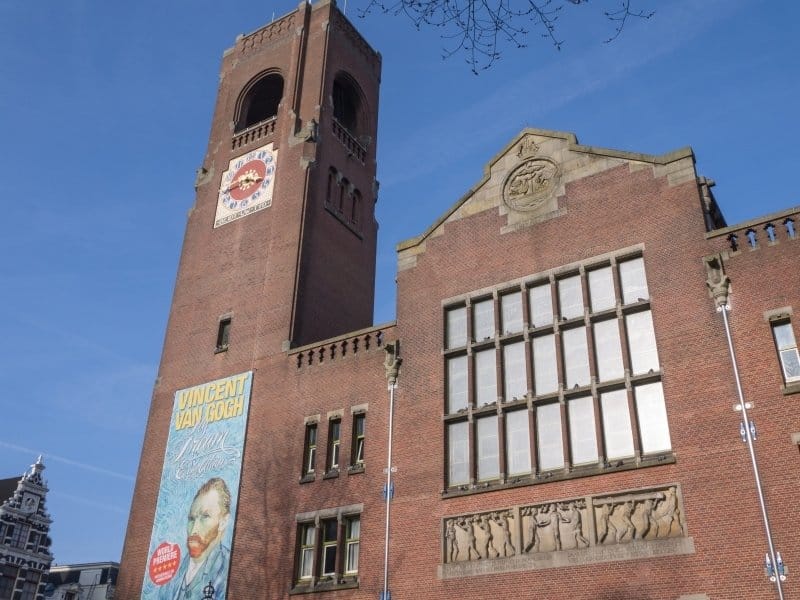
Beurs van Berlage
Beurs van Berlage is the old stock exchange of Amsterdam. This imposing building, located in the heart of the city, opened its doors in 1903. The beautiful clock tower was inspired by the 13th-century tower in Brescia (Italy) – Torre del Popolo. Today, the former stock exchange serves as a venue and can be visited.
Old Church (De Oude Kerk)
De Oude Kerk, or the Old Church, is one of Amsterdam’s must-sees as it is the oldest, still existing building of Amsterdam! It dates back to the beginning of the 14th century. The church serves also as an exhibition venue.

De Bijenkorf Department Store (De Bijenkorf)
De Bijenkorf is one of Amsterdam’s most iconic department stores, housed in an equally striking historic building near Dam Square. Often compared to New York’s Macy’s or London’s Harrods, it has long been a landmark for shopping in the city. The building itself, designed in Revival style, dates from the early 20th century and adds architectural interest to this busy part of Amsterdam.
New Church (De Nieuwe Kerk)
De Nieuwe Kerk (New Church) is located in the heart of Amsterdam on Dam Square. Built in the early 15th century, the church no longer serves religious functions and is now used as a venue for exhibitions and cultural events. In 2002, it was the setting for the wedding of King Willem-Alexander and Queen Máxima, the current monarchs of the Netherlands.
Royal Palace Amsterdam (Koninklijk Paleis Amsterdam)
The Royal Palace is the official residence of the Dutch King. It’s a beautiful building with imposing interior. The building also serves as an exhibition hall. The Royal Palace on the Dam is open for visitors, when it’s not used by the Royal Family.
Dam Square (De Dam)
Dam Square is the heart of Amsterdam and one of the city’s busiest and most visited squares. While it may lack a bit of elegance, it plays an important role as a central meeting point and historical location. Surrounded by landmarks such as the Royal Palace and De Nieuwe Kerk, it’s a place you’re likely to pass through several times during your visit.
National Monument (Nationaal Monument)
The National Monument commemorates those who lost their lives in World War II and in later conflicts. Built in 1956, it stands on Dam Square as a place of national remembrance. Each year on 4 May, during Remembrance Day in the Netherlands, the official national ceremony is held here.
Nine Streets (De Negen Straatjes / De 9 Straatjes)
Negen Straatjes (Nine Streets) is a popular shopping area in Amsterdam, known for its small boutiques, vintage stores, and independent local shops. Spread across nine narrow streets between the main canals, the area has a lively yet intimate atmosphere. It’s an easy place to lose track of time while browsing, even if you’re just window-shopping.
Amsterdam Walking Route 3
Amsterdam Walking Route 3 is suited to a slower, more scenic walk. You’ll pass quiet canals, charming bridges, and hidden courtyards in the city centre. A great option if you enjoy photography and a more relaxed pace.
Begijnhof
Begijnhof is one of Amsterdam’s most famous landmarks – a small oasis of green in the busy city centre. It’s a lovely inner courtyard encircled by the houses of the Beguines – a sisterhood established in the Middle Ages for women who didn’t want to take vows but still wanted to live independently.
Note: When you are visiting the Begijnhof, please, keep silence and observe the rules, as written at the entry.
De Krijtberg Church (De Krijtberg / Sint-Franciscus Xaveriuskerk)
De Krijtberg is an active Roman Catholic church built at the end of the 19th century. Designed in Neo-Gothic style, the church stands out for its richly decorated façade and tall spires, which contrast with the surrounding streets. Inside, you’ll find an ornate interior with colourful stained glass and detailed altars, making it well worth a brief stop during your walk.

Mint Tower (Munttoren)
Munttoren, or the Mint Tower, belonged once to the city’s defensive walls. In the 17th century it was used as a mint, hence the name. It has a lovely carillon that plays every 15 minutes.
Staalmeesters Bridge (Staalmeestersbrug)
Staalmeestersbrug is a drawbridge on the Groenburgwal canal, offering one of the classic views in Amsterdam. From here, you look straight down the canal towards the tower of the Zuiderkerk, framed by trees and historic canal houses. It’s a popular spot for photos and a nice place to pause during the walk.
Rembrandt Square (Rembrandtplein)
Rembrandtplein (Rembrandt Square) is best known for its clubs, cafés, and lively nightlife, but it’s also worth visiting during the day. The square is home to a statue of Rembrandt and is surrounded by terraces where you can sit for a drink and watch daily city life unfold. It’s a good place to take a short break while walking through this part of the city.
Seven Bridges (De Zeven Bruggen)
Seven Bridges Area is one of the most picturesque spots in Amsterdam. Along the Reguliersgracht canal, seven bridges line up in a row, creating a layered view of water, arches, and historic canal houses. The area is especially popular for photography and offers one of those classic Amsterdam canal scenes you may recognise from postcards.

Fifteen Bridges View (Brug van 15 Bruggen)
Fifteen Bridges View Bridge (Brug van de 15 Bruggen) is known for the unusual perspective it offers over Amsterdam’s canals. From this bridge you can actually see 15 bridges, including the one you are standing on!
Amsterdam Walking Route 4
Amsterdam Walking Route 4 combines local neighbourhoods with famous landmarks. The route leads you through the Jordaan, past courtyards, cafés, and sights like the Anne Frank House, before ending near the Rijksmuseum. A good choice if you want variety in one walk.
Jordaan Neighbourhood (De Jordaan)
Jordaan Neighbourhood is mostly famous for its restaurants, brown cafes and boutique shops, but its hidden courtyards are the real treasure. There are 19 inner courtyards in Jordaan. Can you find them all?

Northern Church (Noorderkerk)
Noorderkerk, or the Northern Church, is one of the first churches built in Amsterdam after the Reformation. What’s so special about this church is that it was the first church that has a floor plan in the form of a cross.
Anne Frank House (Anne Frank Huis)
Anne Frank House is one of the most visited and historically significant sites in Amsterdam. The museum is located in the house where Anne Frank and her family hid during World War II, and it tells the story of her life and the diary she wrote while living in the Secret Annex.
Western Church (Westerkerk)
Westerkerk (Western Church) has the highest church tower in Amsterdam, rising 87 metres (286 ft) above the city. Built in the 17th century in Renaissance style, the church is one of the most recognisable landmarks along the Prinsengracht. The tower is visible from many parts of the city and helps you easily orient yourself while walking through the Jordaan area.

Café Chris
Cafe Chris is the oldest cafe in this lovely neighborhood. It opened in 1624 as a beer house. You can’t visit Jordaan and not stop there for a drink.
Leidseplein (Leidseplein)
Leidseplein is a lively square known for its many cafés, terraces, and entertainment venues. One corner of the square is dominated by the elegant Stadsschouwburg, Amsterdam’s City Theatre, which adds a touch of grandeur to the area. By evening, Leidseplein becomes one of the city’s main hubs for nightlife, with theatres, bars, and music venues drawing in crowds.
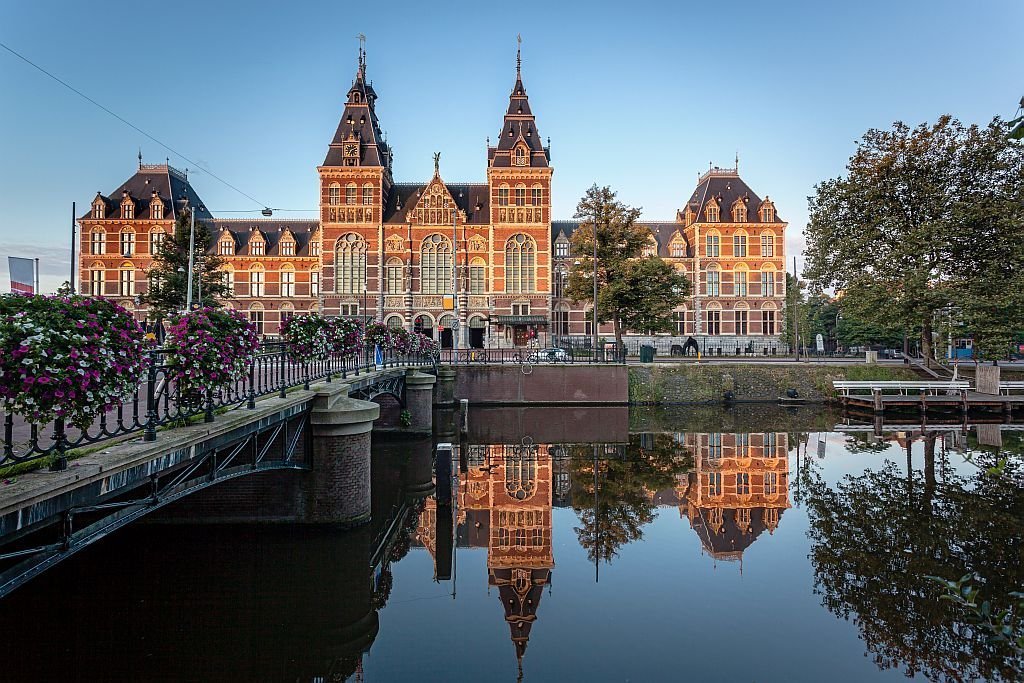
Rijksmuseum (Rijksmuseum)
Rijksmuseum is another masterpiece of the famous Dutch architect Pierre Cuypers (Remember the Central Station?). It was built in 1885 and beautifully restored in 2013 to its previous glory. Rijksmuseum is the biggest museum in the Netherlands and a true bucket-list item for every visitor of Amsterdam.
Fun fact: The famous sign of I amsterdam that was drawing numerous tourists to the Museumplein has been removed in 2018.
Final Words
Amsterdam is a city best experienced on foot. Its compact layout, flat streets, and network of canals make walking not only easy but genuinely enjoyable, while driving through the centre is often impractical. Wandering along the canals and through different neighbourhoods allows you to notice details and atmosphere that are easy to miss when using public transport.
These four Amsterdam walking routes are designed to help you explore the city at your own pace, offering structure without taking away the freedom to wander. Whether it’s your first visit or a return trip, they provide a practical and relaxed way to get to know the Dutch capital.
If it’s your first time in Amsterdam, I recommend starting with Walking Route 1 or 2 and saving Jordaan for a quieter morning. Download the map, wear comfortable shoes, and simply enjoy getting lost along the canals – that’s when Amsterdam is at its best.
