

Dating back to the 1st century AD, the Lower German Limes constitute an integral part of the history of the Roman Empire during this era. One of the most well-known and important historical sites in the Netherlands today, the Lower German Limes represent the northernmost of the frontiers of the Roman Empire.
TRIVIA:
❒ Official name: Frontiers of the Roman Empire – The Lower German Limes
❒ Date of inscription: 2021
❒ Reference number: 1631
Did you know that the Netherlands is a home to 13 World Heritage Sites? Curious which they are? Read this:
➭ The 13 UNESCO World Heritage Sites in the Netherlands
DISCLOSURE: This post contains affiliate links. If you make a purchase via one of those links, I will earn a commission at no extra cost for you.
What are the Lower German Limes?
The Lower German Limes refer specifically to the structures found on the northern border of the Roman Empire. Today. This historical site, including multiple different locations, is found in both the Netherlands and Germany. From Katwijk aan Zee to Nijmegen right across the border into Germany, this UNESCO World Heritage Site in the Netherlands spans an incredible 400 km along the Lower Rhine River. It’s comprised of a grand total of 44 clusters of 102 archaeological components.
Buildings and infrastructure built along the riverbank include both military installations and civil structures. The settlement operated as a frontier of the Roman Empire for about 450 years, and today its remains, provide historians and archaeologists with a vast amount of valuable information about the Roman civilisation from the 1st to the 5th centuries AD.

History of the Lower German Limes
Initially established as a military base in the last few decades BC, the Lower German Limes were intended to contribute to the Roman Empire’s mission to conquer specific Germanic territories across the Rhine River. However, this was not particularly successful, and the left side of the river bank went on to be transformed into a fortified frontier.
The dynamic landscape of this location proved to be an obstacle, both in terms of engineering and military operations, due to its proximity to low-lying water. However, the Roman Empire proved its prowess with its strategic water management systems and advanced military engineering and architectural designs.
In fact, the wetland conditions actually went on to be highly advantageous in an archaeological sense, providing excellent conditions for the preservation of timber and other kinds of organic remains – a plethora of incredible artefacts, preserved for thousands of years, have been found in waterlogged soil deposits.
Indeed, the Lower Germanic Limes have proven to be invaluable in contributing to modern knowledge of the Roman Empire and its infrastructure, culture, boat building ability, technical knowledge and military architecture.
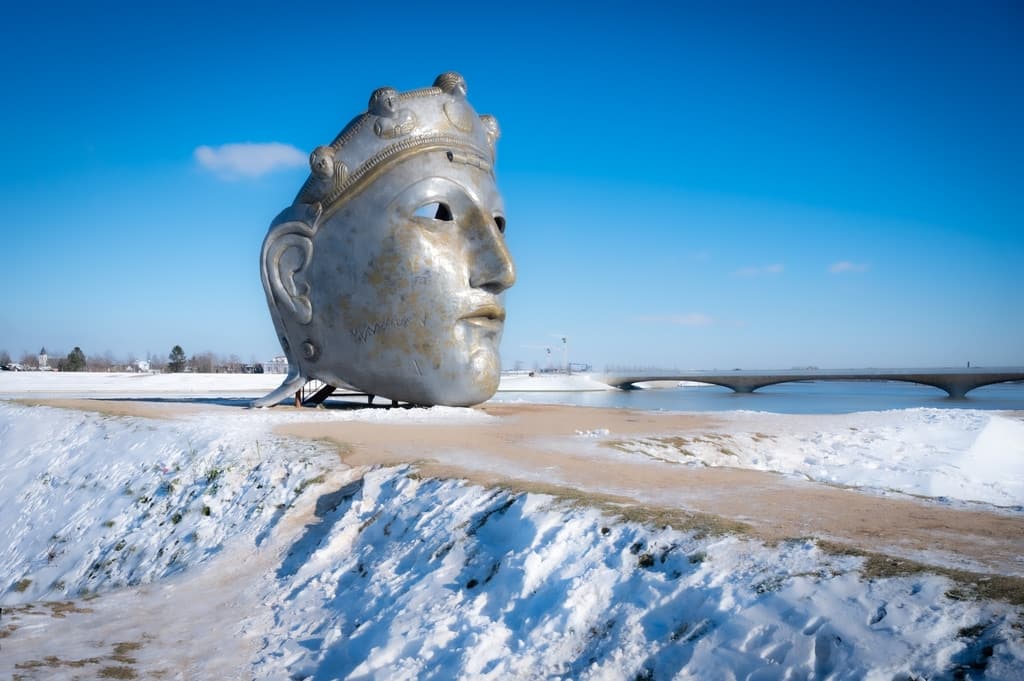
Why are the Lower German Limes a UNESCO World Heritage Site?
Deemed a UNESCO World Heritage Site in the Netherlands in 2021, the Lower German Lines undoubtedly demonstrate outstanding universal value in the influence that Roman military forces and frontiers had on both the landscape and society during the first five centuries AD. Furthermore, it shows how far-reaching technical knowledge was within the Roman Empire, spanning the entire empire and even its furthest corners and peripheries.
Furthermore, the Lower Germanic Limes meet multiple UNESCO World Heritage Site criteria:
- The site represents an essential interchange of human values over a significant period in architecture, town planning and landscape design.
- It acts as an incredible testimony to Roman civilisation in a plethora of different ways.
- The Lower German Limes’ military installations form part of the earliest linear frontier in the Roman Empire, illustrating significant development in human history.
In addition, the site’s archaeological remains have been incredibly conserved and are not currently in any immediate danger of being harmed or damaged. The Lower German Limes boast phenomenal authenticity, having been almost entirely unaffected by changes that occurred between the end of the Roman period and the modern era as a result of the site’s impressive preservation caused by waterlogging.
Indeed, it’s no wonder the Lower German Limes are so stringently protected by both German and Dutch national and state heritage laws and have, thus, been deemed a UNESCO World Heritage Site in the Netherlands.

Where are the Lower German Limes
Found on both sides of the German-Dutch border, the Lower German Limes span roughly 400 km along the Lower Rhine River’s west bank – from the Rhenish Massif in Germany to the coast of the North Sea in the Netherlands.
On the Dutch side, there are a total of 39 different locations along the historical frontier. However, a few of these locations stand out: Castellum Meinerswijk (Arnhem), Castellum Hoge Woerd (Utrecht), Castellum Fectio (Vechten), Albaniana (Alphen aan de Rijn), DOMunder (Utrecht).
This a map with the location of all 39 sites:
Places to visit at the Lower German Limes
As a result of the vast remains of the Lower German Limes, a multitude of different museums and historical exhibitions await you in several different cities and regions across the Netherlands and Germany. While there are loads of different sites and locations on offer, a few stand out and ought to be at the top of your to-do list when exploring the UNESCO sites the Netherlands.

These are the most famous Roman forts in the Netherlands that can be visited:
- Castellum Meinerswijk – built between 10 and 20 AD; Address: Meginhardweg 55, 6841HB Arnhem
- Archeological Park Matilo – remains of a fort, and traditional kitchen gardens from Roman times; Address: Besjeslaan, 2314 Leiden
- Castellum Fectio – a fort from 315 AD; Address: Marsdijk 2, Bunnik
Also, there is a number of museums that exhibit archeological finds from Roman times. The most famous among them are:

Rijksmuseum van Oudheden
The Rijksmuseum van Oudheden is the National Archeological Museum of the Netherlands. It is a classic museum, displaying incredible findings from the Lower German Limes such as old swords, coins, scriptures and figurines. Besides artefacts from Roman times, there are exhibited also objects from Ancient Greece, Etruria, Egypt and the Near East.
Practical info: Rijksmuseum van Oudheden
Address: Papengracht 30, 2311 TX Leiden
Entrance fee: adults – 14 EUR; children (till 18 yoa) – free of charge
Opening times: Tuesday-Sunday, from 10 am till 5 pm
Museum Het Valkhof
Museum Het Valkhof in Nijmegen is one of the most important archeological museums in the Netherlands. It rich collection follows the 5000 years of history of the area. Nijmegen (or Noviomagus in Latin) is the oldest Roman settlement in the Netherlands, which makes it the oldest Dutch city. Besides the collection of archeological artefacts, the museum also exhibits classical and modern art.
Read more: Best things to see and do in Nijmegen
Practical info: Museum Het Valkhof
Address: Kelfkensbos 59, 6511 TB Nijmegen
Entrance fee: adults – 12,50 EUR; children (13-17 yoa) – 6,25 EUR
Opening times: Tuesday-Sunday, from 11 am till 5 pm

DOMunder in Utrecht
DOMunder is an interesting museum that offers an interactive experience. With a torch in hand you descend underground under the Cathedral of Utrecht and embark on a discovery quest along the ruins of the Roman fort Traiectum.
Practical info: DOMunder
Address: Domplein 4, 3512 JC Utrecht
Entrance fee: adults – 12,50 EUR; children – 10 EUR
Opening times: daily, from 10:30 am till 4:30 pm

Museum Hoge Woerd
The Museum Hoge Woerd near Utrecht is home to phenomenally recreated structures and scenes, including a fortress, as well as an original and authentic 25-m wooden boat from the 2nd century AD. This museum offers interactive experiences that will be enjoyed by both adults and children alike.
Practical info: Museum Hoge Woerd
Address: Hoge Woerdplein 1, 3454 PB De Meern
Entrance fee: free of charge
Opening times: Tuesday-Sunday, from 10 am till 5 pm
Archeon Museum Park
The Archeon Museum Park is an amusement park that offers an immersive experience, with fun re-enactments and educational recreations. You’ll witness soldiers in costume, gladiator fights or enjoy making your own ceramics through methods used during the era of the Roman Empire. Besides the Roman times, you can experience there the prehistorical times, the Vikings times, the Middle Ages. You can also stay at the Archeon park.
Practical info: Archeon Museum Park
Address: Archeonlaan 1 , 2408ZB , Alphen aan den Rijn
Entrance fee: adults – 24,50 EUR; children (4-9 yoa) – 21,50 EUR; there’s a discount for online tickets (about 1 EUR); Buy tickets here
Opening times: Thursday-Friday, from 10 am till 4 pm; Wednesday, Saturday, Sunday, from 10 am till 5 pm
Final words
Undoubtedly worthy of its UNESCO World Heritage Site status, the Lower Germanic Limes in the Netherlands are an absolute must-see, regardless of which locations you choose to visit. The northernmost section of the frontiers of the Roman Empire, the Lower German Limes are of outstanding universal value in every sense of the phrase, representing all facets of life and development in the Roman Empire from the 1st to the 5th centuries AD. No trip to the Netherlands is complete without visiting at least one of these sites or museums – preferably more. So set aside a couple of hours, or even a couple of days, and immerse yourself in the vast and astounding history that awaits you at the Lower Germanic Limes.
