

Schiermonnikoog National Park is the oldest and best-preserved national park in the Netherlands. Featuring a beautiful and unique landscape that’s home to many protected species of plants and animals, Schiermonnikoog is a fantastic place to visit either for a day trip, or perhaps a longer visit. There’s plenty to see and do here, so let’s have a closer look!
TRIVIA:
❒ Official name: Schiermonnikoog National Park (Nationaal Park Schiermonnikoog)
❒ Established: 1989
❒ Size: 5400 ha
❒ Location: Friesland
DISCLOSURE: This post contains affiliate links. If you make a purchase via one of those links, I will earn a commission at no extra cost for you.
About Schiermonnikoog National Park
National Park Schiermonnikoog is about 54 square kilometres, and occupies most of Schiermonnikoog island, just off the northern coast of Friesland. Despite the small size, it’s home to a surprising variety of terrains: grasslands, forests, sand dunes, beaches, marshes, and of course, mud flats. Schiermonnikoog National Park is included as part of the Wadden Sea UNESCO World Heritage Site, thanks to its important ecosystems and animal habitats.
Read more: Curious which are the other World Heritage Sites in the Netherlands? Read this post about the UNESCO Sites in the Netherlands.
There’s some interesting history here as well. It’s not known when Schiermonnikoog was first inhabited, but some of the earliest mentions of the island date to the 15th century, when it was occupied by Cistercian monks in grey robes (hence the name, which translates as Grey Monk Island). As a challenging landscape, Schiermonnikoog has always been sparsely populated, and attempts to establish farming communities over the centuries have met with little success. Because of this, much of the island is extremely well preserved, and it’s hardly surprising that in 1989 it became the Netherlands’ first National Park.

One incredible aspect of Schiermonnikoog is that because of winds, tides, and occasional storms from the North Sea, the island is slowly moving. It’s estimated that 800 years ago, Schiermonnikoog was around two kilometres north of its present location! However, its current rate of movement is much slower thanks to a system of dikes controlling floodwaters, and forest plantations slowing down sand drift.
How to get to Schiermonnikoog National Park
Schiermonnikoog National Park is accessed via ferry from Lauwersoog, taking around 45 minutes to arrive at the only town on the island. Note that the island is almost completely car free (only a few residents are permitted cars), so only pedestrians and cyclists are permitted on the ferry. Fares range from 14 to 15 EUR in low season and from 17 to 18 EUR in high season for pedestrians without a bike. You can take up to 30 kg hand luggage to the island.
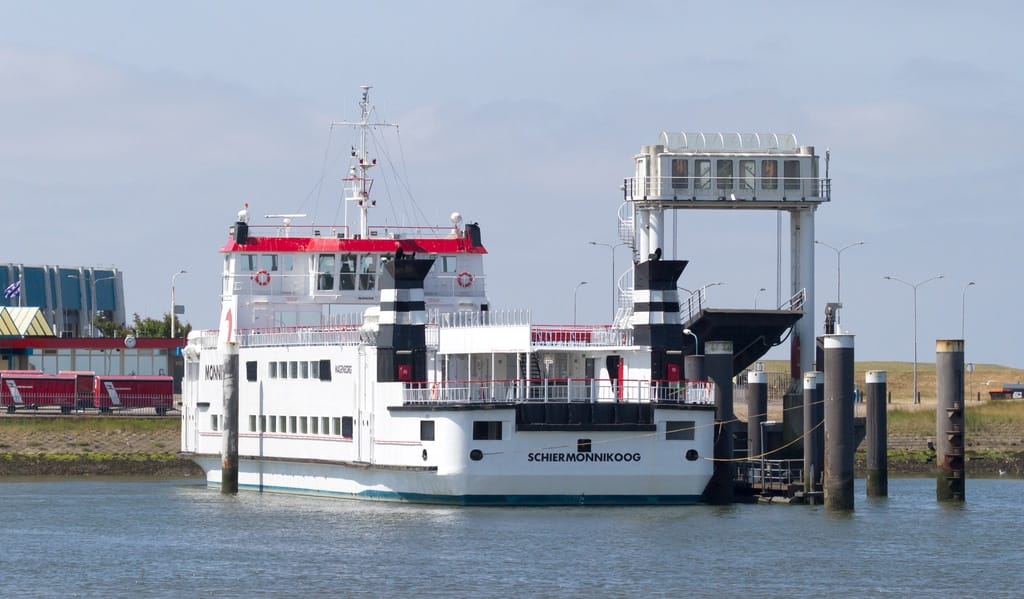
There’s also a speed ferry from Lauwersoog that takes about 20 minutes to go to the island.
Here are some distances to Lauwersoog from Groningen by car:
- Groningen – Lauwersoog: 42 km/42 min
- Leeuwarden – Lauwersoog: 44 km/38 min
- Amsterdam – Lauwersoog: 195 km/2 hr 10 min
- Eindhoven – Lauwersoog: 280 km/3 hr
- Rotterdam – Lauwersoog: 260 km/2 hr 50 min
Getting by public transport to Lauwersoog can a bit of a daunting task, as you need to go first either to Groningen or to Leeuwarden and then take the bus. If you travel from Groningen you need to take bus line 163 and from Leeuwarden – bus line 155. The trip takes about an hour.
Tip: Read this post about using the public transport in the Netherlands. It’s packed with tips that only a local knows!
Getting around on the island
Once on the island, there are electric buses, which can take you to your destination. They depart from the ferry port. Make sure you have a debit or credit card, as payment in the bus is cashless. Read this post for more information on how to use the public transport in the Netherlands.
Facilities in Schiermonnikoog National Park
There’s one main information centre on the island, located in the only village, called Schiermonnikoog, too.
Information centre Het Baken
Information Centre Het Baken is the central tourism hub on the island. Newly renovated and re-opened in 2021, Het Baken should be your first stop on Schiermonnikoog. Here you’ll find plenty of brochures and information sheets about the National Park and the island itself, along with interactive displays about the landscape, the plants and animals, and of course the Wadden Sea UNESCO World Heritage Listing too.
The staff here at Het Baken can also assist you with planning a visit, joining tours and excursions, hiring equipment like bicycles or binoculars for birdwatching, and any questions you might have! And of course, there’s a gift shop too so you can take a little memento of Schiermonnikoog home with you.
Practical info:
Address: Reeweg 9, 9166 PW Schiermonnikoog
Opening times: Monday-Saturday from 9 am till 5 pm; Sundays from 10 am till 2 pm
Things to do at Schiermonnikoog National Park
As you’d expect, there’s many excellent things to see and do at Schiermonnikoog National Park. Let’s have a look at some of the highlights.

1. Hiking & cycling
Since the majority of Schiermonnikoog is uninhabited, it’s a great place to go hiking or cycling. There’s over 30 kilometres of cycle paths criss-crossing the island, most of which are quite wide and easy-going, with plenty of room to share. And as a bonus, there’s almost no cars on Schiermonnikoog, so you won’t have any issues with safety either.
Be sure to stop by the Information Centre Het Baken before leaving to pick up a map and ask about suggested routes, though most are only available in Dutch. In general, the western end of the island has more pathways, while the eastern end is better for off-road hiking and trekking.
Bicycle hire is available from several places in town, including Soepboer, Veerdam, Johanna’s Hof, and Schierfiets. Prices and models vary, but most have a large range available, including electric bikes, children’s and family bikes too.

2. Go mud hiking
A fun activity to do on Schiermonnikoog is mud hiking or mudflat walking, called wadlopen in Dutch! Schiermonnikoog National Park is part of the Wadden Sea mud flats, a unique area that’s just begging to be explored. However, ensure your mud hiking is done with an accredited guide, as changing tides and weather conditions are dangerous to the unwary. Despite the dangers, it’s a great way to get a totally different perspective on the landscape. You might even see some of Schiermonnikoog’s seals! Inquire about the possibilities at the information centre.
3. Birdwatching
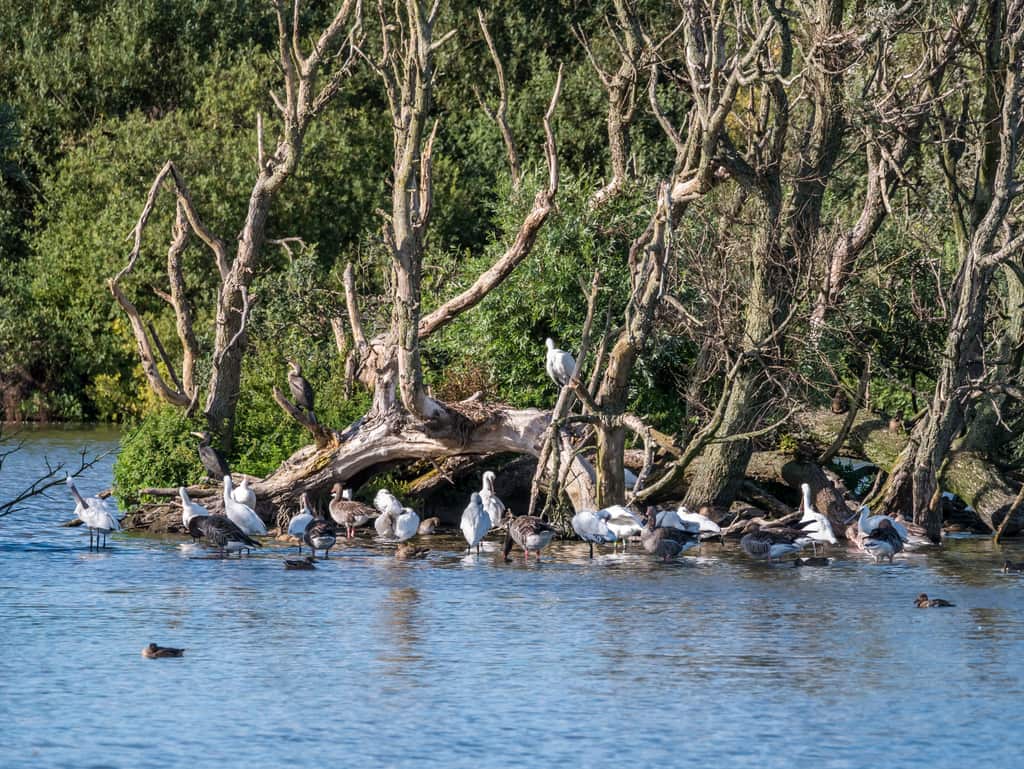
National Park Schiermonnikoog is one of the most important bird sanctuaries in the Netherlands, with over 300 species of water birds like ducks, cormorants, ospreys, harriers, spoonbills, egrets, and many more. The best spot for birdwatching on the island is at the bird watching hut on the Westerplas Schiermonnikoog, a freshwater lake that also holds most of the island’s drinking water. It’s a beautiful, tranquil spot, where you can relax and enjoy Schiermonnikoog’s beautiful bird life. The bird hide is fully accessible, but note that access to the Westerplas is closed during bird breeding season.

4. Visit the beach
As a sand island, Schiermonnikoog is essentially just one large beach! And there’s some fantastic areas for hitting the water here on the island. The main beach runs for several kilometres along the western and northern coastlines of the island – it’s also quite wide, so there’ll be plenty of space. There are some patrolled sections with lifeguards, mainly located just north of town near the Noordertoren lighthouse and the Bunkermuseum Schlei.
5. Go kitesurfing
Kitesurfing is also an option, though it naturally depends on the weather conditions each day. Lessons are available, along with rental equipment, too – check out Kitesurfschool Antix, KiteMinded or KiteMobile if you’re interested. Kitesurfing is allowed only on beach section between Badweg (near pole 3) and beach pole 5 (near Jacobspad).
6. Go camping
Schiermonnikoog National Park is a very popular destination for a day trip; during peak season thousands of visitors flood the island every day. But with only 900 permanent residents, it’s a totally different place in the evening once the day-trippers have gone home. Although there’s plenty of hotels and B&Bs available, the best way to experience the national park is by camping under the stars (it’s also one of the darkest places in the Netherlands!). The main campsite is Camping Seedune, which offers a full range of facilities, including tent hire, so you don’t have to carry your own all the way from the mainland.

Where to stay on Schiermonnikoog
Hotels on Schiermonnikoog:
Hotel Duinzicht – Badweg 17, 9166 ND Schiermonnikoog
Hotel Graaf Bernstorff – Reeweg 1, 9166 PW Schiermonnikoog
Hotel De 4 dames – Langestreek 94, 9166 LG Schiermonnikoog
Beach Hotel Om de Noord – Badweg 117, 9166 NH Schiermonnikoog
Hotel Brasserie Brakzand – 66 Langestreek, 9166 LE Schiermonnikoog
Studios and apartments:
De Salon – Langestreek 70, 9166 LE Schiermonnikoog
Suites Ambrosijn – Langestreek 13, 9166 LA Schiermonnikoog
‘t Wente – 64 Langestreek, 9166 LD Schiermonnikoog
Campings:
Country Camp De Kooiplaats – Kooipad 1, 9166 SB Schiermonnikoog
Camping Seedune – Seeduneweg 1, 9166 RX Schiermonnikoog
Holiday parks:
Landal Vitamaris – Badweg 53, 9166 NE Schiermonnikoog
Final words
Overall, Schiermonnikoog is a fascinating and peaceful National Park in the Netherlands. It’s a great place to enjoy a variety of beautiful landscapes, go for a swim, cycle, or hike around – maybe even a spot of birdwatching! It’s hardly surprising that Schiermonnikoog is the oldest National Park in the Netherlands.
Do you need some extra help to plan your trip to the Netherlands? Join the dedicated Exploring the Netherlands Facebook Group, where you can get tips from other travellers and locals. Or perhaps you have questions or comments? Join the group and I’ll be happy to answer them.
