

Lauwersmeer National Park is one of the most important national parks in the Netherlands. This fascinating and unique landscape is a key bird habitat in the Netherlands, home to a huge variety of both migratory and resident bird species. Additionally, Lauwersmeer National Park is an Important Bird and Biodiversity Area (IBA) of Western Europe, an official Dark Sky Park, and part of the Wadden Sea UNESCO World Heritage Site. So whether you’re interested in bird watching, star gazing, or just enjoying gorgeous natural surroundings, Lauwersmeer is a fantastic place to visit. Let’s have a closer look!
TRIVIA:
❒ Official name: Lauwersmeer National Park (Nationaal Park Lauwersmeer)
❒ Established: 2003
❒ Size: 6000 ha
❒ Location: Groningen, Friesland
DISCLOSURE: This post contains affiliate links. If you make a purchase via one of those links, I will earn a commission at no extra cost for you.
About Lauwersmeer National Park
Lauwersmeer National Park is located on the border of Friesland and Groningen provinces, roughly a 35 minute drive from both Leeuwarden and the city of Groningen. The National Park itself is roughly 60 square kilometres, covering both the Lauwersmeer itself and large tracts of adjacent land, and the whole area is known as an estuary system, where the Lauwers river meets the sea.
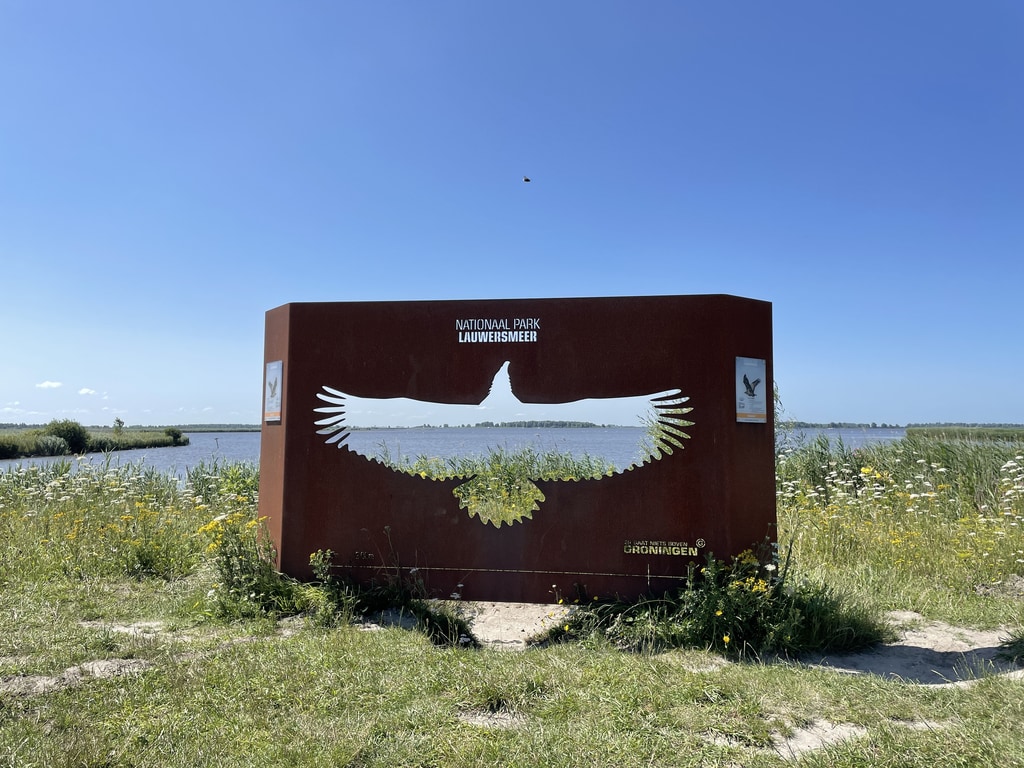
For most of recorded history, the area was known as Lauwerszee, holding a mixture of fresh and saltwater depending on which way the tide was flowing. But, in the 1960s, a dike was constructed at Lauwersoog to prevent catastrophic flooding events, and the salt water gradually drained away through the sluice gates. As of May 25th 1969, the Lauwerszee was entirely replaced by the freshwater of Lauwersmeer. Over time, birds and other animals returned to the area, and it was formally designated as a National Park in 2003, under the management of Staatsbosbeheer.
In 2009, Lauwersmeer National Park joined the UNESCO World Heritage List as part of the Wadden Sea World Heritage Site, with UNESCO specifically praising the undisturbed intertidal ecosystems. And lastly, in 2016, Lauwersmeer National Park was accredited as the second Dark Sky Park in the Netherlands.
Read more: Curious which are the other World Heritage Sites in the Netherlands? Read this post about the UNESCO Sites in the Netherlands.
How to get to Lauwersmeer National Park
If you travel by car, the N361 road makes half a circle around the park in north direction. There are lots of parking facilities where you can park your car and then explore the park on foot or do some of the activities like surfing or canoeing.
Here are some distances to Lauwersmeer National Park (Lauwersoog in Groningen and Oostmahorn in Friesland):
- Groningen – Lauwersoog: 42 km/42 min; Groningen – Oostmahorn: 45 km/47 min
- Leeuwarden – Lauwersoog: 44 km/38 min; Leeuwarden – Oostmahorn: 38 km/35 min
- Amsterdam – Lauwersoog: 195 km/2 hr 10 min; Amsterdam – Oostmahorn: 190 km/2 hr
- Eindhoven – Lauwersoog: 280 km/3 hr; Eindhoven – Oostmahorn: 275 km/2 hr 55 min
- Rotterdam – Lauwersoog: 260 km/2 hr 50 min; Rotterdam – Oostmahorn: 255 km/2 hr 45 min
If you travel by public transport, then you need to go to first either to Groningen or to Leeuwarden and then take the bus. Bus line 163 goes from Groningen to Lauwersoog and stops at few places along the national park. The trips takes about an hour. Bus line 155 from Leeuwarden goes to Lauwersoog and it takes about an hour, as well.
Read more:
Best things to see and do in Groningen
Best things to see and do in Leeuwarden
Getting to Oostmahorn from both Leeuwarden and Groningen can be a bit tricky, as you will need first to get with the train to Feanwâlden, then take the bus to Dokkum and at the end call one of the local dial-a-ride services to get you to Oostmahorn.
Tip: Read this post about using the public transport in the Netherlands. It’s packed with tips that only a local knows!
Facilities in Lauwersmeer National Park
There are two main tourist information centres at Lauwersmeer: Activity Centre Lauwersnest, and the Information Pavilion (HIP).
1. Activity Centre Lauwersnest
You’ll find the Activity Centre at the park entrance near Lauwersoog. It’s a great spot to get brochures and information about what you’ll see in the park, along with a souvenir shop of course! It also features a fishing pond, fire pit, a build-your-own-bird’s nest forest, and a gnome path that kids will love. As the name suggests, the Activity Centre also runs regular activities for folks of all ages, and it’s the starting point for many guided excursions into the park. Be sure to check the event calendar (Dutch only) for full details of what’s on.
Practical info:
Address: De Rug 1, 9976 VT Lauwersoog
Opening times: 1 April – 1 November: Wednesday, Saturday and Sunday from 11 am till 5 pm; 1 November – 1 April: from 11 am till 4 pm
2. The Information Pavilion (HIP)
The Information Pavilion sits at the main harbour in Lauwersoog, right where the river meets the Wadden Sea. Here you’ll find plenty of helpful stuff and useful information about Lauwersmeer National Park, the Wadden Sea UNESCO World Heritage Site, and nearby Schiermonnikoog National Park as well. There are interactive screens, where you can play and learn, and a fantastic “Experience” room, as well!
Practical info:
Address: Haven 6, 9976 VN Lauwersoog
Opening times: April-September: Wednesday-Sunday from 11 am till 5 pm; October-March: from 11 am till 4 pm
Things to do at Lauwersmeer National Park
As you’d expect from such a large and diverse area, Lauwersmeer National Park has plenty of excellent things to see and do. Whether you’re up for an active workout like cycling or hiking, some high-speed power boating, or some slightly more sedate bird watching, Lauwersmeer has lots of highlights and options. Let’s have a look at some of the best.
1. Go bird watching
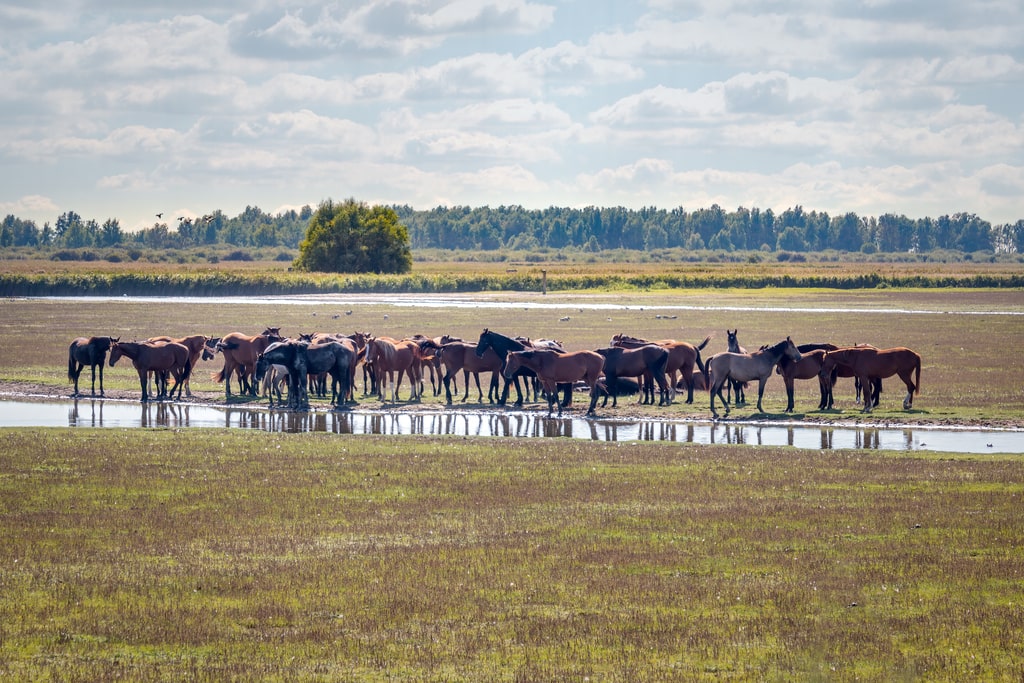
Bird watching is one of the highlight activities to do at Lauwersmeer National Park. Year-round, you’re likely to see many varieties of birds, including waterbirds and birds of prey. Be sure to visit during late summer or early spring, when the spoonbill, golden oriole, Eurasian oystercatcher and the avocet start and finish their annual migrations, or visit during the depths of winter, when the park is home to tens of thousands of migratory barnacle geese. And of course, the uncountable numbers of other migrating birds that use Lauwersmeer as a stopover on their long journeys between wintering and breeding areas.

Some of the top bird watching spots in Lauwersmeer National Park are Jaap Deensgat, De Baak, Zomerhuisbos, and Ezumakeeg, where dedicated hides are set up and rare species are commonly observed. And of course, don’t start any bird watching trip without visiting the Lauwersnest Activity Centre for a map, and a birding guide!
2. Do some stargazing
Lauwersmeer National Park is one of the two official Dark Sky Park Netherlands. But you’re probably wondering, what is a dark sky park? Well, a Dark Sky Park is a designated area where artificial lighting is kept to a minimum (or just banned completely). If you live in a city, you’ve probably noticed that you see very few stars, versus the thousands of stars visible when you’re out in the country.
This is because of what’s known as light pollution, usually caused by bright street lighting, security lights, cars, billboards, and many other features of modern life. But there’s a large body of evidence suggesting that light pollution causes many issues with nature: nocturnal animals can’t feed properly, birds and bats have their rhythms disrupted, plants can’t grow properly, and so on. Dark Sky Parks aim to reverse this trend.
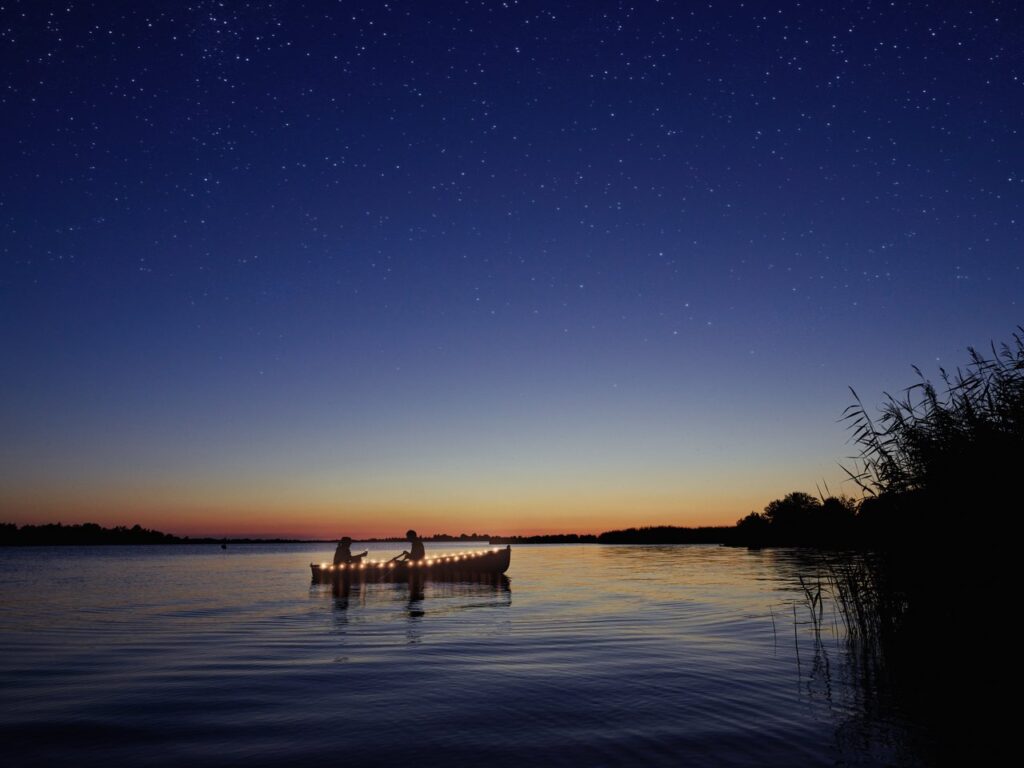
But of course, the most noticeable impact for humans is that more stars are visible in the night sky! And Lauwersmeer National Park is an excellent place to do some star gazing (surprisingly, it’s one of the few places in the Netherlands where the Milky Way is visible!), pondering the mysteries of the universe with its infinite depths and possibilities.
There are three designated stargazing spots in the national park: at the Lauwersnest Activity Centre, at the Achter de Zwarten sky platform (located past Suyderoogh), and the Vlinderbalg sky platform (located on the Strandweg). Regular guided excursions are also run by Staatsbosbeheer, so be sure to double check the event calendar (Dutch only) before visiting. And of course, star gazing is best done in winter, when the sun is at its lowest distance below the horizon.
3. Hiking and walking
With beautiful landscapes on show, Lauwersmeer National Park is a great place to go hiking. There are 11 official hiking trails around the park, of which nine are clearly marked with coloured posts. Distances range from a comfortable 1,5 kilometres, up to a more challenging 10 kilometres for experienced hikers. Highlights include the 1,5-km Lauwersnest Bird Experience Path (designed for the whole family), the 3-km Orchid Route near Strandweg, and the 5,6-km Observation Tower route through Ballastplaatbos.
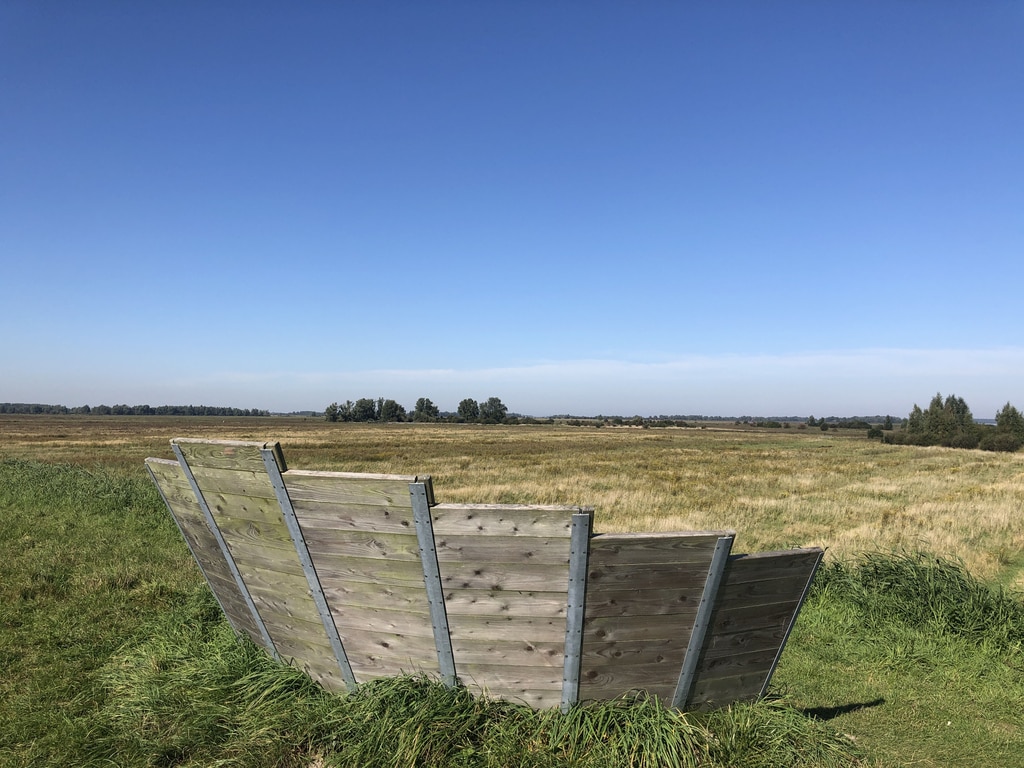
There are also two great options for those with limited mobility: one starting from the Het Booze Wijf restaurant, the other starts at the De Rug parking lot and goes through the Ballastplaatbos. Note that the north-eastern edge of the national park borders the Marnewaard military training area, and some of the trails venture through the area, so be sure to obey all warning signs and instructions.
4. Cycling
There’s plenty of great cycling paths that run through and around Lauwersmeer National Park. Many of the park’s walking trails have been built as joint bicycle/walking paths, so there’s lots of space to go around. Some of the best cycling can be found in the southwestern Kollumeroord, along with the Ballastplaatbos, and the cycle path over the Ezumakeeg.
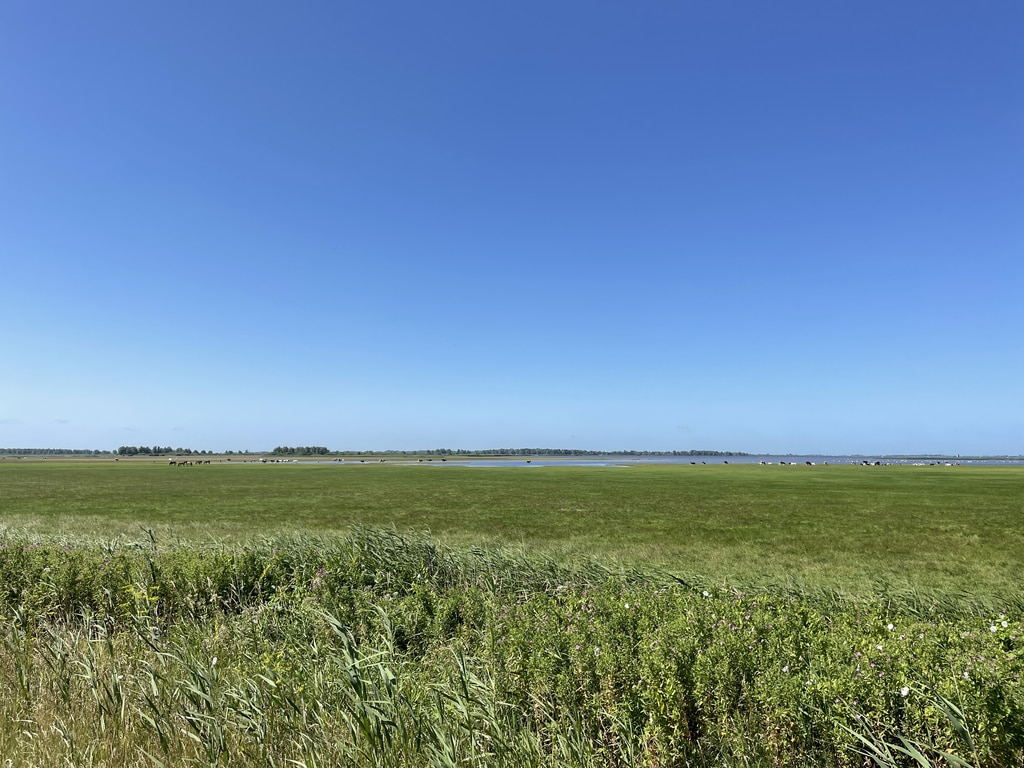
If you’re up for a challenge, consider the 43-kilometre Round Lauwersmeer cycle route. It covers all the major highlights around the national park, including bird watching hides, sky viewing platforms, and lookouts over the Wadden Sea. Brochures are available both online, and at the Lauwersnest Activity Centre.
Note that as with the hiking trails, many cycle paths run through the Marnewaard military training area, so be sure to heed warning signs and follow instructions.
5. Boating, surfing and swimming
No visit to Lauwersmeer would be complete without getting out on the water! There’s about 2000 hectares of available water to explore, though some areas are off-limits for conservation reasons. The waters are generally quite calm and can be sailed or canoed in most weather conditions. Three boat ramps are available, at the Reitdiep (Groningen side), the Dokkumer Ee (Friesland side) and the Robbengat lock in Lauwersoog. On the water, you’ll find marinas at Dokkumer Nieuwe Zijlen, Lauwersoog, Oostmahorn, and Zoutkamp, and there are plenty of moorings and jetties scattered around too, where you can stay for a maximum of three nights.
Boat hire is also available, from Jachthaven Lunegat in Kollum, Bootverhuur Groningerland in Winsum, and Waddeninzicht at Dokkum. But if you’d prefer to relax and have someone else pilot the boat, consider a cruise from Lauwersmeer Cruise Company based in Oostmahorn.
Canoeing can be a great way to see areas of Lauwersmeer as well, getting into smaller and quieter areas away from the crowds. The best launching spots are at the four marinas mentioned above, the Zoutkamperril, at Dokkumer Nieuwe Zijlen, or any of the lake’s beaches.
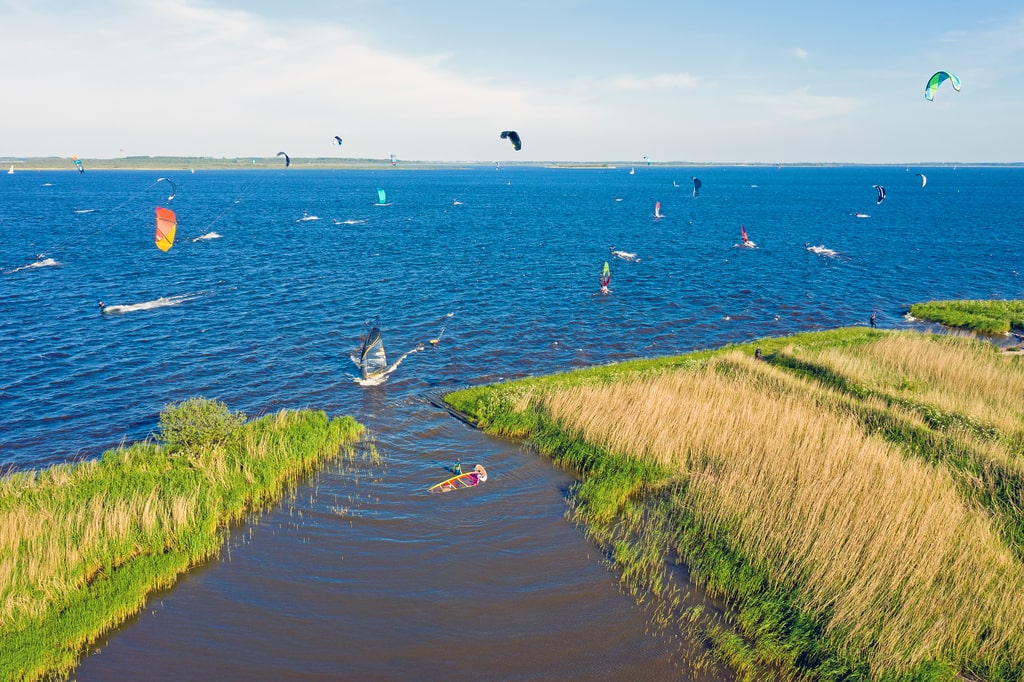
Lauwersmeer is renowned among windsurfers for the excellent conditions, thanks to the steady winds and shallow waters. Designated windsurfing spots are at Hoek van de Bant, Oostmahorn, the Lauwersoog beaches, and the beaches near Natuurdorp Suyderoogh. Note that each location will have signage indicating where to surf, so be sure to follow the rules! Hoek van de Bant is also designated for kitesurfing between June and October.
And of course, if you’re just interested in having a quick swim (or relaxing on the beach!), there are plenty of beaches around Lauwersoog, Oostmahorn, and Hoek van de Bant. There’s lots of parking available, but on hot summer days it can still get very busy so be sure to arrive early!
Where to stay near Lauwersmeer National Park
The choice of accommodation around Lauwersmeer National park is overwhelming. There are a few holiday parks and holiday villages, and numerous B&Bs.
Here is my selection about the best places to stay near or in Lauwersmeer National Park:
Holiday Park Esonstad in Oostmahorn – they offer water sports and golf, there’s also an indoor swimming pool, a finnish sauna, and a Turkish steam bath. The holiday houses vary from a 4-person maisonette to a 12-person villa and they offer comfort, luxury and extra luxury services.
Address: Landal Esonstad, Skanserwei 28, 9133 DV Anjum
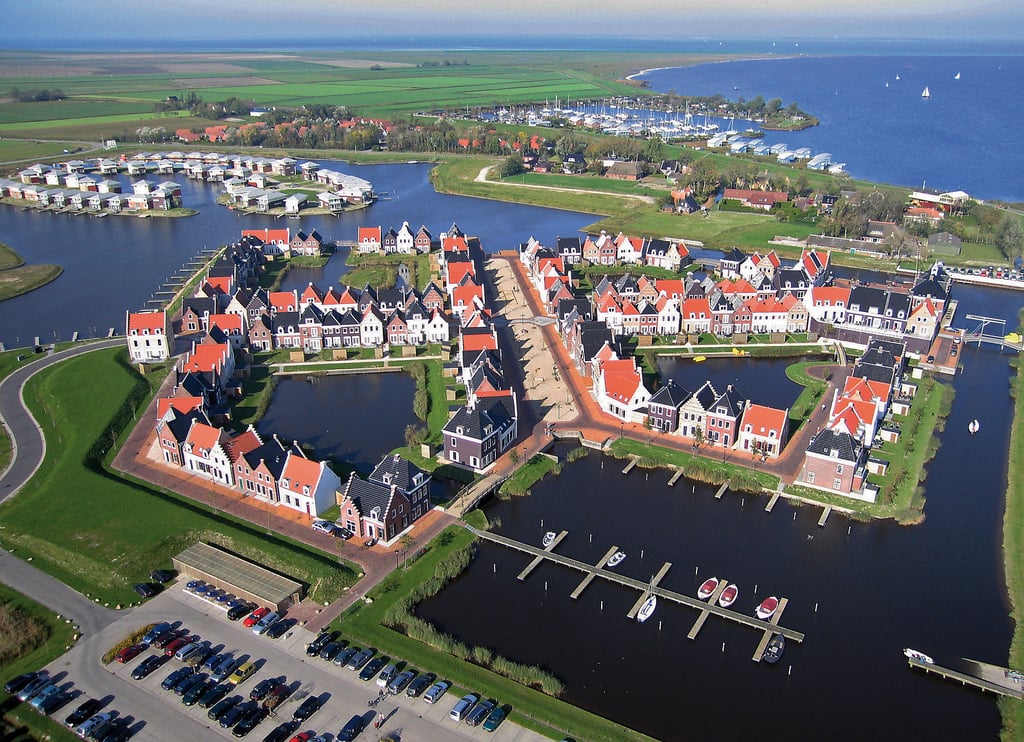
Holiday Park Esonstad in Oostmahorn – they offer water sports and golf, there’s also an indoor swimming pool, a finnish sauna, and a Turkish steam bath. The holiday houses vary from a 4-person maisonette to a 12-person villa and they offer comfort, luxury and extra luxury services.
Address: Landal Esonstad, Skanserwei 28, 9133 DV Anjum
B&B Sauna D’Olle Pastorie – Address: Hoofdstraat 28, 9975 VS Vierhuize
B&B Sea La Vie – Robbenoort 57, 9976 VC Lauwersoog
B&B Greidesicht Kollumerpomp – Foijingaweg 114, 9293 LR Kollumerpomp
B&B Bij De Kunstenaars – Noorderstraat 14, 9971 AC Ulrum
Final words
Overall, Lauwersmeer National Park is a standout national park in the Netherlands. In addition to the beautiful environs, it offers plenty of recreation opportunities, and is an important habitat for animals and plants. If you’re planning to visit northern areas of The Netherlands, Lauwersmeer is one of the highlights of Friesland and Groningen National Parks.
Do you need some extra help to plan your trip to the Netherlands? Join the dedicated Exploring the Netherlands Facebook Group, where you can get tips from other travellers and locals. Or perhaps you have questions or comments? Join the group and I’ll be happy to answer them.
